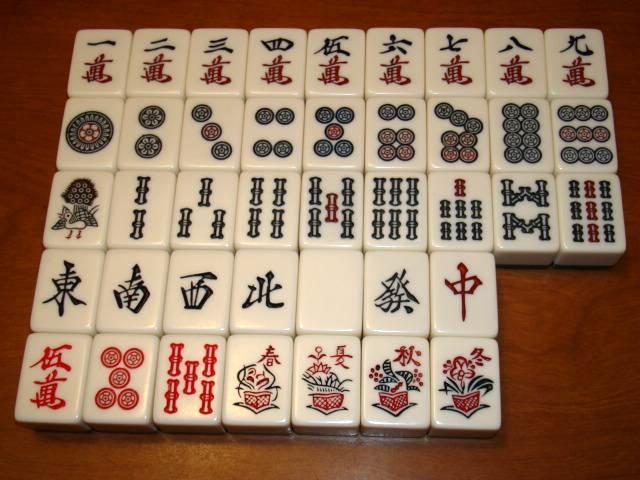
A history of Japanese Mahjong, from classical rules and Amano Daizou's Houchi Rules to Asada Tetsuya's Mahjong Hourouki and modern professional play.
Read this post, then follow the linked practice or community path.
The live app experience on tsumo follows the same route structure, ruleset labels, and practice surfaces linked below.
Blog focus
Read the latest Mahjong blog posts from tsumo.
Follow internal links to connect each post back to local clubs, puzzles, tutorials, and playable routes.
By tsumo Editorial. Published 2026-05-04. 9 minute read.
How a Chinese tile import evolved into Riichi Mahjong, defining Japan's modern competitive play with ready declarations, literary champions, and a culture of deep strategy.
Japanese Mahjong, or Riichi Mahjong, is a story of radical adaptation and fierce cultural debate. What began as a Chinese parlor import in the early 20th century was fundamentally rewritten in the post-war era, trading traditional mechanics for a tense, highly strategic ruleset shaped by maverick players, famous novelists, and technological leaps.
Early Introduction and the Parlor Culture (1900s–1920s)
Mahjong was introduced to Japan primarily in the early 1900s. Historical accounts frequently credit figures like Nagawa Hikosaku, who brought the game back from China around 1909. However, it was Saburo Hirayama who truly sparked its popularization by establishing a prominent club and school in Tokyo in 1924. Initially, players simply adopted Chinese Classical Mahjong rules.
The game rapidly gained traction among intellectuals, writers, and students, serving as a communal pastime. Following the devastation of the 1923 Great Kanto Earthquake, Mahjong parlors (known as jansō) became vital social hubs where people gathered to rebuild their communities over the clatter of tiles.
The Classical Conflict and the Japan Mahjong Association
As the game's popularity surged, so did the need for consistency. In 1929, multiple regional groups merged to form the Japan Mahjong Association, publishing the first official standardized ruleset in 1931. This "Japanese Classical Mahjong" remained the dominant way to play for over a decade, heavily mirroring traditional Chinese scoring and mechanics.
However, this classical era was defined by tension. The Association championed a slower, more deliberate game, resisting any mechanics they felt leaned too heavily into gambling or fast-paced aggression.
Amano Daizou and the Houchi Rules Rebellion
The post-World War II era radically fractured the Mahjong landscape. Players influenced by their experiences in Manchuria, alongside local innovators, began introducing mechanics that accelerated gameplay. The most famous was the 'Riichi' declaration—a wager players make when they are one tile away from winning, locking their hand but promising bonus points. Another major addition was 'Dora', randomly revealed bonus tiles.
In 1952, a visionary player named Amano Daizou formalized these aggressive, high-stakes innovations in the "Houchi Rules." This was a pivotal moment: it was the first written codification of what we now recognize as modern Riichi Mahjong. The traditionalist Japan Mahjong Association vehemently rejected these rules as impure and gambling-oriented, ultimately expelling Amano. Yet, the players had already spoken; the Houchi Rules quickly dominated the jansō.
The Literary Champions: Kan Kikuchi and Asada Tetsuya
Mahjong’s elevation into Japanese high culture was largely driven by writers. In the pre-war era, famous novelist Kan Kikuchi was an avid player who helped legitimize the game among the intelligentsia, famously establishing one of the first formal Mahjong clubs.
But it was the post-war "Mahjong Saint," Asada Tetsuya, who truly brought the game to the masses. In the late 1960s, Asada serialized his seminal novel, Mahjong Hourouki (Mahjong Vagrant Record). The gritty, thrilling depiction of underground Mahjong gamblers captured the national imagination. Capitalizing on this, Asada and other top players like Takeo Kojima formed the "Mahjong Shinsengumi" in the 1970s. They appeared in magazines, television broadcasts, and newspapers, laying the foundation for Mahjong as a spectator sport and leading directly to the establishment of the first professional leagues.
The Technological Leap: The Automatic Table
As the game exploded in popularity in the 1970s and 80s, the physical experience of playing underwent a revolution. Japan saw the invention and widespread adoption of the automatic Mahjong table. These intricate machines mechanically shuffled and built the tile walls, drastically reducing downtime between hands and accelerating the pace of the game. The automated clatter of the tiles became the iconic soundtrack of modern Japanese Mahjong parlors.
Professionalization and the "Healthy Mahjong" Movement
The 1980s saw the formalization of professional Mahjong, with organizations like the Japan Professional Mahjong League (established in 1981) pivoting the game's reputation from a smoky parlor gambling activity to a recognized, highly competitive mind sport.
To further combat historical stigmas, the "Kenkou Mahjong" (Healthy Mahjong) movement gained traction in recent decades. It promotes the game with a strict "no gambling, no drinking, no smoking" philosophy, marketing it instead as an excellent cognitive exercise for all ages, particularly the elderly.
Today, Japanese Mahjong stands as a masterclass in game design evolution. Supported by a robust professional scene, celebrated in manga and anime (like Akagi and Saki), and played globally via polished online platforms, Riichi Mahjong has firmly cemented its legacy as one of the world's premier strategic tile games.
This editorial piece is part of the same public learning system as the rules guides, tutorial routes, puzzles, and club locator. Use the article for context, then use the linked tsumo guides or practice routes to test the same ideas in concrete Mahjong decisions.
Editorial Notes for Players
For The History of Japanese Mahjong, the useful takeaway is not only the history, culture, or design detail. Read it against the rules questions that appear at a real table: what decisions players must make, which customs are local, and which claims, scoring rules, or etiquette points depend on the chosen variant.
Tsumo keeps this culture article linked to practical pages so readers can separate background material from playable rules. If a rule or term sounds unfamiliar, check the glossary and the matching rules guide before carrying it into a live session.
Related Mahjong Editorial
The History of Chinese Mahjong - A deep history of Chinese Mahjong, from Ming-era Madiao and Yezi cards to the Taiping Rebellion, Western export, and modern competition rules.
tsumo is a free browser-based Mahjong platform supporting Chinese, Hong Kong, Riichi, MCR, Filipino, and Taiwanese rulesets with tutorials, daily puzzles, and bot practice.
 tsumo
tsumo