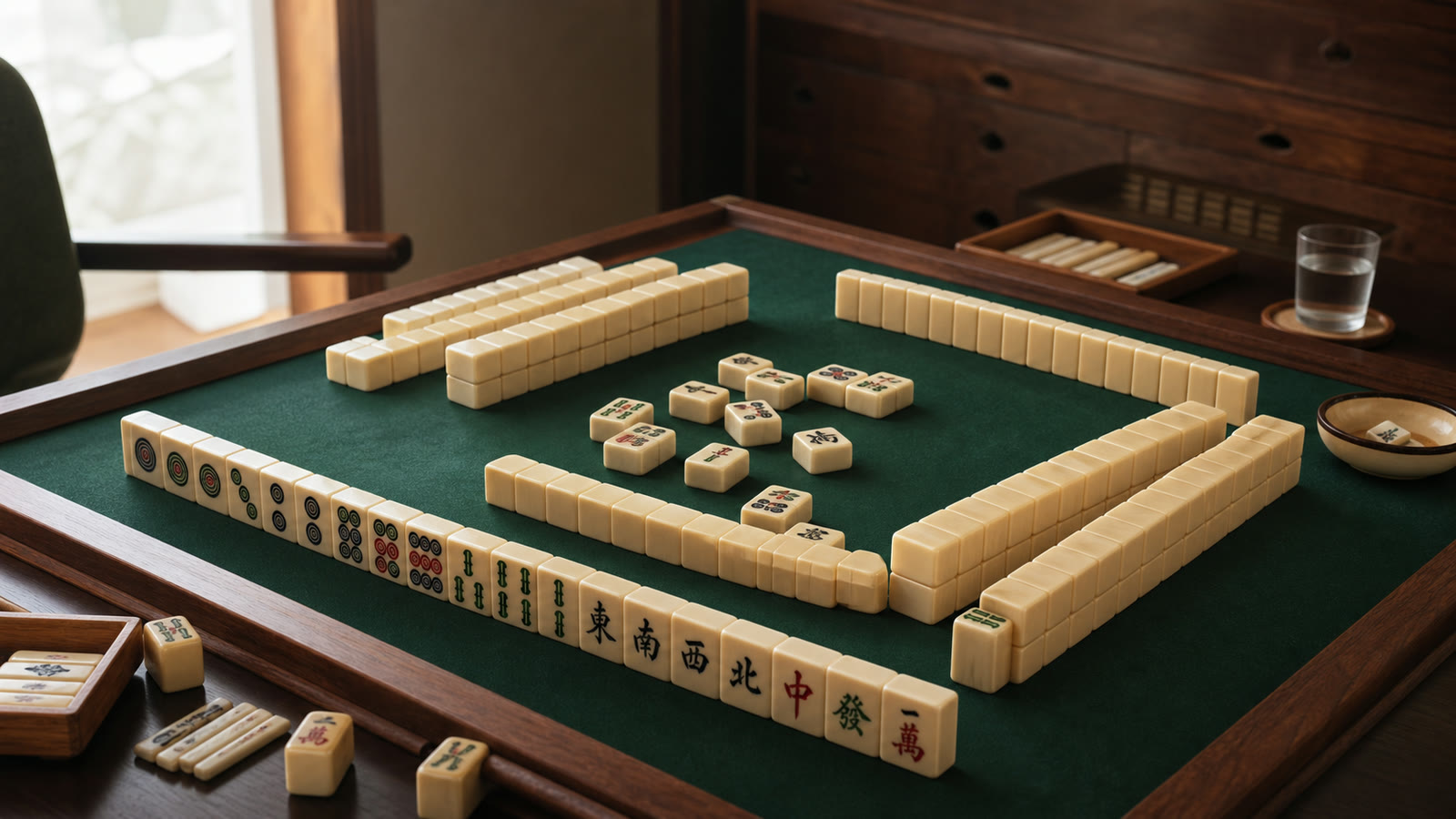
Learn Mahjong etiquette for discards, calls, pace, tile handling, table talk, teaching moments, respectful win declarations, and club play norms.
Read this post, then follow the linked practice or community path.
The live app experience on tsumo follows the same route structure, ruleset labels, and practice surfaces linked below.
Blog focus
Read the latest Mahjong blog posts from tsumo.
Follow internal links to connect each post back to local clubs, puzzles, tutorials, and playable routes.
By tsumo Editorial. Published 2026-06-18, updated 2026-06-29. 8 minute read.
Good Mahjong etiquette keeps information clear, protects pace, and makes mixed-experience tables fair without turning the room stiff.
Mahjong etiquette is not separate from strategy. Clear discards, legal calls, steady pace, and respectful table talk protect the information environment everyone uses to make decisions.
Good Mahjong etiquette keeps information clear, protects pace, and makes mixed-experience tables fair without turning the room stiff. It separates transferable table manners from ruleset-specific procedure and tournament policy.
Tournament materials and Riichi study references support procedure-specific advice, while cross-variant etiquette is framed as table practice.
Discard clearly and consistently
A discard should be visible, named or placed according to local custom, and easy for the next player to evaluate. Mumbled or hidden discards create avoidable disputes and can disadvantage newer players.
Practice move: Make clarity your default even in casual games.
Call only within the table rhythm
Claims should be prompt enough to avoid confusion and calm enough not to pressure the table.
Different rulesets have different claim windows and priority rules, so etiquette begins with knowing the active rules. If two players speak at once, pause and resolve priority before moving tiles.
Handle tiles with respect
Do not mix the wall, touch another player tiles, reveal hidden information, or rearrange exposed melds carelessly.
Physical discipline helps everyone trust that the table state is accurate. Teach tile handling early because it prevents arguments later.
Keep table talk fair
Friendly conversation is part of many Mahjong rooms, but advice, reactions, and hints can leak information. A teaching table can allow more explanation than a competitive table, but the difference should be explicit.
Practice move: When in doubt, save strategic comments until the hand ends.
Declare wins cleanly
A win declaration should identify the action, stop play, and give the table a moment to verify shape and value.
Rushing the reveal can create scoring mistakes; over-celebrating can make new players feel small. Win like you expect to share the table again next week.
Practical Checklist
Place discards where everyone can see them.
Wait for claim resolution before drawing.
Do not coach live discards at a non-teaching table.
Reveal wins in a verifiable order.
Ask local customs before correcting others.
Where to Go Next
Learn Mahjong online - Use the beginner learning path when a piece raises a rule, scoring, or table-flow question you want to practice.
Read Riichi rules - Use the Riichi rules guide for yaku, furiten, reach declarations, and push-fold decisions mentioned here.
Practical Applications
Cross-Variant Etiquette Caveats
Etiquette should protect play, not enforce one region as universal. Riichi tournaments care about timing, wall handling, declarations, and visible procedure. American Mah Jongg tables may care more about Charleston rhythm, card handling, joker exchange etiquette, and social pacing. Family Chinese tables may prioritize host deference, local scoring customs, and how openly beginners can be coached.
Before the first hand, ask which variant and house rules are active instead of correcting from memory.
During the hand, keep discards visible, calls clear, and advice out of live decisions unless the table agreed to teaching mode.
After a mistake, explain the fix once and return to the game; repeated public correction turns etiquette into performance.
At a tournament, read the event document because penalties and appeal procedures are etiquette with consequences.
At a social table, match the room tone: some groups talk constantly, while others treat silence during hard decisions as respect.
The most transferable rule is consent around instruction. A table can be friendly and still be precise if players know when coaching is allowed, who handles scoring, and how disputes end. Ambiguity creates more friction than strictness does.
Good manners also include leaving well. Help reset tiles, thank the host, confirm what you owe if money or venue fees are involved, and avoid turning the parking-lot conversation into a trial of someone else's mistake.
Correction Scripts
Etiquette improves when players have language for correction. Instead of saying you are wrong, a host can say, at this table we handle that call after the discard is fully named. Instead of debating during a live hand, a player can say, let us finish the hand and check the event sheet afterward. Those scripts protect accuracy without turning every mistake into a status contest.
Players should separate three tables: teaching, regular social play, and tournament play. Teaching tables can allow open hands and advice. Regular social tables can allow light reminders but should avoid coaching a live decision. Tournament tables should follow published procedure even when a friendly shortcut would feel faster.
Use neutral language: active rule, local habit, or event procedure is better than real Mahjong.
Correct the action, not the player; embarrassment slows learning more than a replayed hand does.
When unsure, pause and ask the host or judge instead of letting the loudest player become the rulebook.
After the session, update the group notes so the same etiquette question does not repeat every week.
Etiquette for Online and Live Play
Online etiquette overlaps with live etiquette but has its own failure modes. Slow turns, disconnects, chat pressure, emoji taunts, and unsolicited advice can damage a table even when no physical tiles are mishandled. Good online etiquette asks players to learn platform norms just as they would learn room norms in a club.
Live etiquette adds physical responsibilities: square the wall, keep discards readable, announce calls clearly, avoid reaching across another player's space, and reset the table without rushing someone who is still checking the score. These habits make the game easier to audit and more pleasant to join.
The shared principle is reducing ambiguity. Players should know when a discard is final, when advice is welcome, how missed calls are handled, and who decides a dispute. Most etiquette arguments are really process arguments with no agreed process.
In online rooms, avoid coaching strangers unless the room is explicitly for teaching.
In live rooms, keep hands and phones from obscuring discards or score sticks.
In mixed-experience rooms, ask whether the next hand is teaching mode or regular mode.
Etiquette as Retention
Etiquette is also a retention tool. New players return when corrections are clear, jokes are not humiliating, and the table does not hide essential rules as insider knowledge. Experienced players return when the room respects pace, accuracy, and fair procedure. Good etiquette shows that manners are not softness; they are how a four-player game remains playable across skill levels.
Manners as Shared Procedure
Good etiquette frames manners as shared procedure, not personal polish. A clear discard, a named call, a readable wall, and a settled correction policy make the hand auditable. A respectful tone makes players willing to be corrected. Both parts matter. If a room is friendly but vague, mistakes multiply. If a room is precise but humiliating, newcomers leave. Players need language for both accuracy and care. That includes asking before coaching, separating teaching mode from regular play, and accepting that tournament procedure may be stricter than family-table habits. This framing works across variants because every Mahjong table needs trust in the visible state of the game and trust that mistakes will be handled fairly.
Source Notes and Limits
This advice draws on tournament materials and Riichi study references, then generalizes only where etiquette principles apply across variants: clarity, consent around teaching, visible procedure, and respectful correction.
Specific penalties, declaration rules, and appeal processes belong to the active event or host. This advice avoids presenting Riichi tournament manners as the only valid table culture.
Quick FAQ
Is etiquette mostly about being quiet? No. It is about making procedure clear, avoiding unwanted coaching, respecting the host or event rules, and correcting mistakes without humiliating players.
Can I correct a player during a hand? Only if the table is in teaching mode or the active rules require immediate correction; otherwise wait until the hand ends.
Why include variant caveats? Because Riichi tournament etiquette, American Mah Jongg social norms, and family-table customs can all be valid in their own rooms.
tsumo Editorial — tsumo Editorial is the organizational byline for source-backed Mahjong guides and articles published by tsumo. The team checks rules explanations against implemented app behavior and maintains corrections through the public contact process.
 tsumo
tsumo