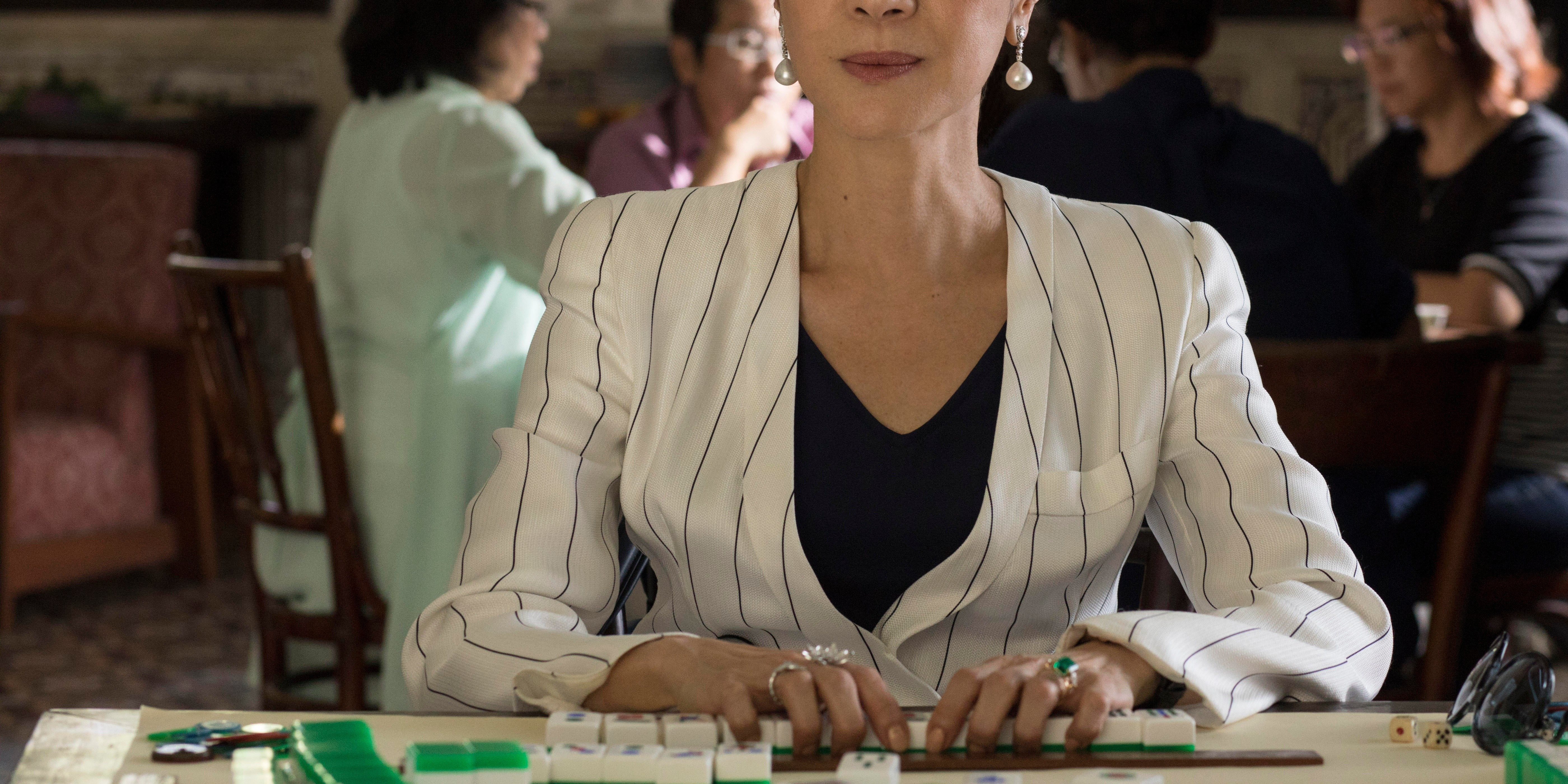
A comprehensive history of Chinese Mahjong, exploring its origins in Madiao cards, the Taiping Rebellion, Joseph Park Babcock, and modern MCR rules.
Read this post, then follow the linked practice or community path.
The live app experience on tsumo follows the same route structure, ruleset labels, and practice surfaces linked below.
Blog focus
Read the latest Mahjong blog posts from tsumo.
Follow internal links to connect each post back to local clubs, puzzles, tutorials, and playable routes.
By tsumo Editorial. Published 2026-05-03. 9 minute read.
Mahjong is often described as ancient, but the familiar Chinese tile game is a modern Qing-era invention with roots in Ming Dynasty leaf cards, gambling rooms, family tables, and international rulemaking.
Chinese Mahjong is not a relic from the distant ancient court. The game people recognize today is much more recent: a 19th-century Chinese invention that turned older draw-and-discard paper card ideas into a thick, clacking tile game built for noise, calculation, luck, and conversation.
The Paper Ancestors: Yezi and Madiao
To understand Mahjong, you have to look at what came before the tiles. Its true ancestors were paper cards. The lineage traces back to "Yezi" (leaf cards) from the Tang and Song dynasties, but the most direct precursor is a Ming Dynasty game called "Madiao" (horse-hanging). Madiao was played with 40 paper cards divided into four suits based on money: cash (coins), strings of cash, myriads (tens of thousands of cash), and tens of myriads.
Over centuries, these money-suited card games evolved. Players began to draw, discard, and assemble sets of matching cards or sequences, laying the exact mechanical foundation that Mahjong would later adopt.
The Ningbo Legend: From Cards to Tiles
The exact birthplace of modern Mahjong is debated, but most historians place its crystallization in the commercial world of Shanghai, the Yangtze River Delta, and specifically the coastal city of Ningbo during the mid-to-late 1800s (Qing Dynasty).
A famous legend attributes the invention of the game to a Ningbo official named Chen Yumen in the 1850s. According to the story, players were frustrated by paper cards blowing away in the coastal winds or on boats. Chen supposedly adapted the card mechanics to thick, heavy bone-and-bamboo tiles, making the game tactile, weather-resistant, and public. While historians argue that the game was likely the result of a collective evolution rather than a single inventor, the shift to tiles was revolutionary. Tiles could stand upright to hide a hand and made a sharp clacking sound that gave Mahjong one of its older names: the sparrow game.
Why the Tiles Look Familiar
A traditional Chinese Mahjong set usually has 144 tiles, and their designs preserve clues from their paper ancestors. The "Dots" (circles) suggest individual copper coins. The "Bamboos" (sticks) are actually strings of a hundred coins. The "Characters" (myriads) use Chinese numerals and the character for ten thousand.
The Crucible of the Taiping Rebellion
The mid-19th century was a period of immense turmoil in China, highlighted by the Taiping Rebellion. Interestingly, this era of mass movement and social upheaval helped spread the nascent game of Mahjong. As soldiers, merchants, and refugees moved across provinces, they carried their regional pastimes with them. Mahjong proved highly adaptable, moving through teahouses, courtesan halls, and family homes, emerging from the era as a solidified, widely recognized game.
The 1920s Export: Joseph Park Babcock
Mahjong traveled through treaty ports and expatriate circles before exploding overseas in the early 1920s. The key figure in this export was an American representative for the Standard Oil Company named Joseph Park Babcock. Babcock simplified the rules, added Arabic numerals to the tiles, and heavily marketed the game in the United States, trademarking the name "Mah-Jongg."
His promotion worked too well. A massive Mahjong craze swept the West. Department stores like Abercrombie & Fitch sent buyers to China to secure every bone-and-bamboo set they could find, emptying entire villages of their tile-carving output. While the Western craze eventually cooled, the global spread birthed permanent offshoots: American Mah Jongg (standardized with jokers) and Japanese Riichi, ensuring Mahjong became a family of related games rather than a single fixed rulebook.
Prohibition and Revival
In 20th-century China, Mahjong's association with gambling and the "old society" made it politically vulnerable. After the founding of the People's Republic of China in 1949, gambling was strictly prohibited, and Mahjong was heavily discouraged. The game was virtually banned during the Cultural Revolution (1966–1976), where playing it could lead to severe social and political consequences.
However, the game survived underground and returned openly during the reform era of the 1980s. In 1998, to legitimize the game as a healthy sport and separate it entirely from cash gambling, China's State Sports Commission published the Official International Mahjong rules (now known as MCR, or Mahjong Competition Rules). MCR emphasizes complex, standardized scoring and tournament ranking over pure luck.
Why the History Still Matters
Chinese Mahjong has survived because it balances opposites unusually well. It is mathematical but social, local but portable, lucky but skillful, traditional but not actually ancient. Every shuffle carries a complex history: Ming-era paper cards, the winds of Ningbo, the chaos of rebellion, the marketing spin of the 1920s, domestic prohibition, and the continuing search for a fair, competitive table.
This editorial piece is part of the same public learning system as the rules guides, tutorial routes, puzzles, and club locator. Use the article for context, then use the linked tsumo guides or practice routes to test the same ideas in concrete Mahjong decisions.
Editorial Notes for Players
For The History of Chinese Mahjong, the useful takeaway is not only the history, culture, or design detail. Read it against the rules questions that appear at a real table: what decisions players must make, which customs are local, and which claims, scoring rules, or etiquette points depend on the chosen variant.
Tsumo keeps this culture article linked to practical pages so readers can separate background material from playable rules. If a rule or term sounds unfamiliar, check the glossary and the matching rules guide before carrying it into a live session.
Related Mahjong Editorial
The History of Japanese Mahjong - A deep dive into the history of Japanese Mahjong, detailing the 1920s parlor culture, Amano Daizou's radical Houchi rules, the literary boom led by Asada Tetsuya, and the rise of professional leagues.
tsumo is a free browser-based Mahjong platform supporting Chinese, Hong Kong, Riichi, MCR, Filipino, and Taiwanese rulesets with tutorials, daily puzzles, and bot practice.
 tsumo
tsumo