By tsumo Editorial. Published 2026-05-04. 8 minute read.
How the physical spaces where Mahjong is played—from gritty underground parlors to sunny community parks—shape the culture and reputation of the game.
Mahjong is not just a set of rules; it is an environment. The physical space where the tiles are shuffled dictates the speed, the stakes, and the very reputation of the game. Over the past century, Mahjong has lived multiple lives—from the hushed, smoky backrooms of high-stakes gambling dens to the bright, open-air tables of community parks.
The Golden Age of the Jansou (1980s Tokyo)
To understand the modern landscape of Japanese Riichi Mahjong, you have to look back at the economic bubble of the 1970s and 1980s. During this era, Mahjong parlors—known as *jansou*—exploded in popularity across Tokyo and Osaka. These spaces were almost exclusively male-dominated, heavily saturated with cigarette smoke, and synonymous with underground gambling.
In these classic parlors, the game was fast, ruthless, and intimately tied to the Yakuza and the grueling corporate culture of the Japanese salaryman. The *jansou* was a place to blow off steam after a 14-hour workday, but its association with vice kept the game locked firmly in the cultural underground. If you played Mahjong in the 80s, you didn't talk about it at home.
The "Kenkou" (Healthy) Movement
By the 1990s and 2000s, the Mahjong industry realized that its gritty reputation was unsustainable. As the older generation of gamblers aged out, parlor owners needed a way to attract women, students, and families back to the table. This birthed the *Kenkou Mahjong* (Healthy Mahjong) movement.
The rules of a Kenkou parlor are strict: "No Smoking, No Drinking, No Gambling." Parlors began moving out of basements and into brightly lit, street-level storefronts. Today, many Japanese community centers host Kenkou Mahjong specifically for seniors as a way to promote socialization and stave off dementia. The game has successfully rebranded itself from a dangerous vice into a healthy, intellectual sport.
The Chinatown Community Tables
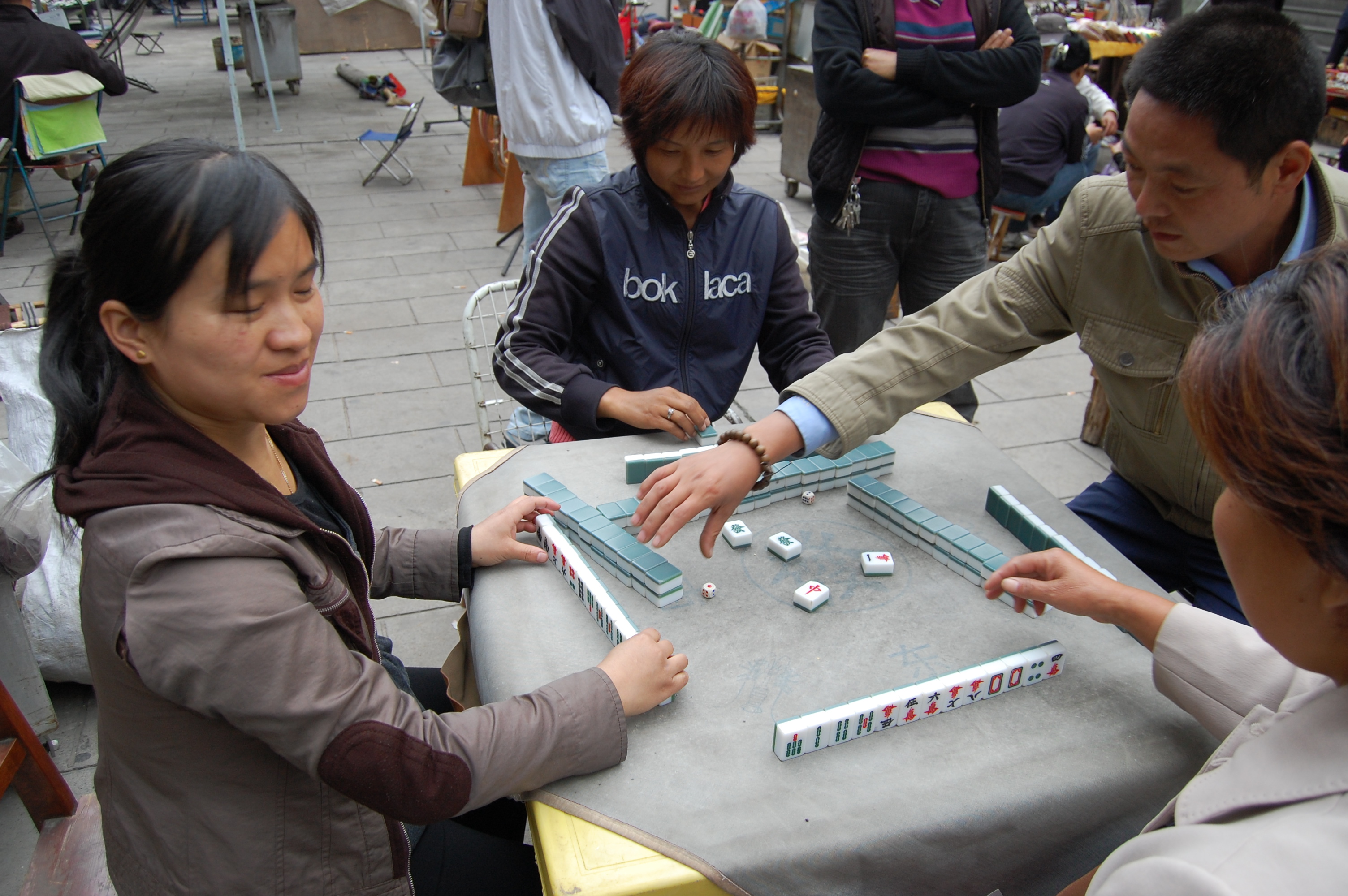
While Japanese parlors were commercial enterprises, the Mahjong spaces in the United States and global Chinatowns have historically been driven by community survival. In spaces like Columbus Park in Manhattan or Portsmouth Square in San Francisco, the Mahjong table is a public institution.
For diaspora elders, these open-air tables serve as a crucial social safety net. The games are loud, highly animated, and deeply integrated into the daily rhythm of the neighborhood. The physical act of playing Mahjong in a public park is a way to reclaim space and preserve cultural identity in a foreign country. Here, the game is not about high-stakes gambling; it is about shared language, memory, and community.
The Modern Digital-Physical Hybrid
Today, the physical Mahjong space is evolving once again. As the game experiences a massive resurgence among Gen Z and Millennials (largely driven by anime and online platforms), a new type of physical club is emerging.
Modern players are abandoning the traditional parlor model entirely. Instead, grassroots clubs are renting out breweries, cafes, and university student unions to host tournaments and teaching sessions. These new spaces are rule-agnostic, welcoming players of American, Riichi, and Chinese variants to sit at the same table. The gritty gambling den of the 1980s has been replaced by the inclusive, social pop-up—proving that Mahjong will always adapt to the spaces we build for it.
Sources and Further Reading
How This Connects to Practice
This editorial piece is part of the same public learning system as the rules guides, tutorial routes, puzzles, and club locator. Use the article for context, then use the linked tsumo guides or practice routes to test the same ideas in concrete Mahjong decisions.
Editorial Notes for Players
For Inside the Mahjong Parlor: From 1980s Tokyo to Modern Chinatowns, the useful takeaway is not only the history, culture, or design detail. Read it against the rules questions that appear at a real table: what decisions players must make, which customs are local, and which claims, scoring rules, or etiquette points depend on the chosen variant.
Tsumo keeps this culture article linked to practical pages so readers can separate background material from playable rules. If a rule or term sounds unfamiliar, check the glossary and the matching rules guide before carrying it into a live session.
Related Mahjong Editorial
 tsumo
tsumo