By tsumo Editorial. Published 2026-05-01. 10 minute read.
An analysis of how directors use the Mahjong table as a narrative device—from the high-society battlefields of Crazy Rich Asians to the quiet generational bridges of The Joy Luck Club.
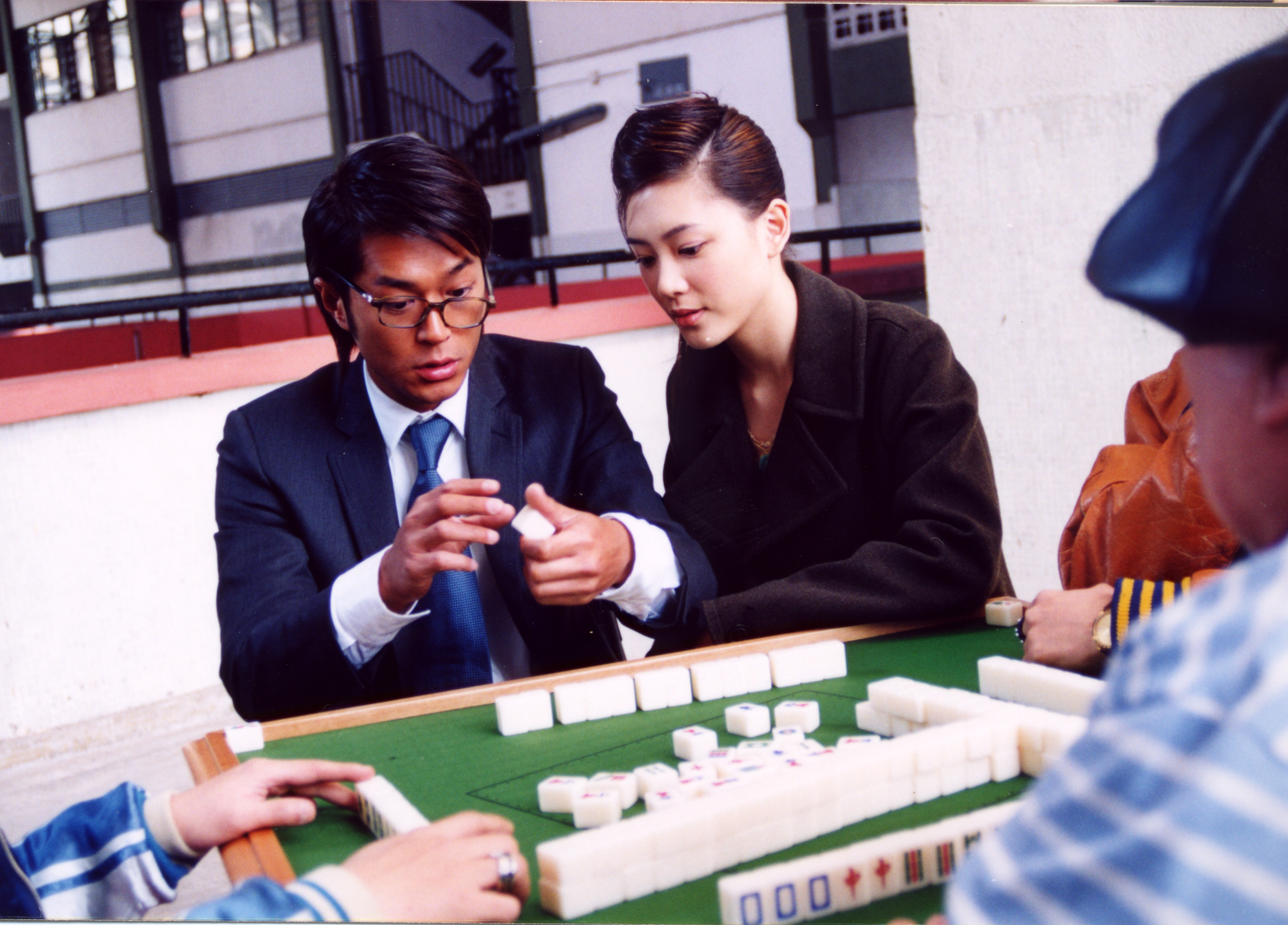
The Mahjong table is rarely just a prop in cinema. Directors use the four-sided game as a natural pressure cooker—a space where characters are forced to sit face-to-face, read each other's intentions, and communicate without speaking. Across different genres, the tiles have been used to represent everything from quiet social warfare and generational memory to the dangerous allure of the gambling underworld.
The Social Battlefield
In these films, the Mahjong table serves as a stand-in for societal hierarchy. The way a character discards a tile, or the choice they make to hold back a winning hand, speaks volumes about their power, class, and political maneuvering.
Crazy Rich Asians (2018)
The climactic scene between Rachel and Eleanor is a masterclass in using Mahjong as a metaphor for cultural philosophy. Sitting in a bustling parlor, the two engage in a quiet duel. Rachel draws the exact tile she needs to win, but instead of declaring victory, she discards it—allowing Eleanor to claim the win. This deliberate sacrifice is Rachel's way of demonstrating the Eastern value of familial duty over the Western ideal of individual pursuit, proving she is strong enough to walk away.
Lust, Caution (2007)
Ang Lee uses the Mahjong table to establish the suffocating tension of 1940s Shanghai. The wealthy wives gather around the tiles draped in jewels, but the table is entirely about espionage, gossip, and performative status. Every glance over the tiles, every pause before a discard, is loaded with suspicion. The game is a smokescreen; the real objective is to read who is sleeping with whom and who is allied with the Japanese occupation.
In the Mood for Love (2000)
Wong Kar-wai frames the Mahjong table as the heartbeat of the crowded 1960s Hong Kong apartment complex. The constant clatter of tiles serves as a sonic backdrop to the protagonists' quiet, repressed romance. The neighbors are always playing, meaning someone is always awake, and someone is always watching. The table represents the suffocating proximity of the community that prevents the main characters from ever acting on their desires.
Generational Trauma & Memory
For diaspora communities and older generations, Mahjong is an anchor. These scenes use the game as a bridge between the past and the present, exploring how culture and grief are handed down across the table.
The Joy Luck Club (1993)
The film centers entirely around the Mahjong table as a site of memory. When June takes her deceased mother's seat at the table with the "aunties," she is physically stepping into her mother's legacy. The game is the one constant that these immigrant women carried with them from a war-torn China to San Francisco. As they shuffle the tiles, the tactile motion triggers their deepest, most painful memories, using the game to bridge the gap between their traumatic pasts and their American-born daughters.
Fresh Off the Boat: Grand-Mahjong (2019)
In this episode, the sitcom leverages Mahjong to explore the hilarious, high-pressure dynamic of Asian-American family expectations. The table etiquette frays as the generations clash, turning a simple family pastime into a battleground for pride. The humor works precisely because everyone at the table understands the unspoken rules of respect and saving face.
Driving Miss Daisy (1989)
Here, Mahjong is shown not as an intense dramatic device, but as the steady rhythm of mid-century Southern Jewish life. Daisy and her friends play casually in the background, anchoring the setting. The game serves as a cultural signifier of her specific social circle—a quiet, comforting ritual that persists even as the civil rights movement reshapes the world outside her window.
The Gambling Underworld & Anime Escapism
In this genre, Mahjong sheds its parlor manners and becomes a deadly weapon. Whether it is a Hong Kong slapstick comedy or a high-stakes Japanese anime, the game is treated like a martial art or a magical duel.
Saki / Saki Achiga-hen (2009-2012)
The *Saki* franchise completely reimagines Mahjong as a supernatural high school sport. The series removes the gambling element entirely and replaces it with sheer shounen spectacle. Characters possess literal magical powers—able to sense the flow of the tiles or summon specific hands through sheer willpower. It treats a drawn tile with the same explosive gravity as a tournament-winning homerun, bringing Mahjong to a completely new, younger demographic.
Tohai: Ura Rate Mahjong Tohai Roku (2024-2025)
Continuing the dark legacy of series like *Akagi*, *Tohai* plunges the viewer into the gritty Japanese underworld. The protagonist is a high schooler who dominates backroom parlors operated by the Yakuza. The animation is tense, highlighting the sweat, the shaking hands, and the psychological warfare of the table. In this world, Mahjong is not a game; it is a brutal instrument of survival.
Fat Choi Spirit (2002)
Released for the Lunar New Year, this Hong Kong comedy starring Andy Lau turns Mahjong into pure slapstick. The "Mahjong King" must win back his fortune while dealing with a curse of bad luck. The film treats the tiles as literal conduits for cosmic fortune, blending exaggerated physical comedy with the deeply ingrained cultural superstition surrounding the game.
Mahjong Heroes (1981)
A classic entry in the Hong Kong gambling film genre, *Mahjong Heroes* shoots the table like a boxing ring. The camera lingers on the sleight-of-hand cheating, the sweat on the players' brows, and the theatrical reveals of winning hands. It helped establish the visual language for how cinematic card-sharking could be applied to the complex, multi-layered mechanics of Mahjong.
King of Mahjong (2015)
This Malaysian-Singaporean comedy leans into the theatrical absurdity of the "Mahjong master" trope. The plot builds toward a grand championship, but the humor comes from treating the humble game with deadly, martial-arts-level seriousness. It highlights how the cultural weight of Mahjong makes it ripe for parody across all of Southeast Asia.
A Gambler's Odyssey 2020 (2019)
Based on a classic novel, this film captures the raw, desperate energy of post-war Japanese gambling dens. The protagonist uses Mahjong to hustle his way through a broken society. The cinematography is distinctly old-school, pulling the camera in close to emphasize the tactile snap of the tiles and the smoke-filled, claustrophobic reality of the players whose lives depend on the next draw.
Sources and Further Reading
- Crazy Rich Asians official release page, Warner Bros.
- The Joy Luck Club Apple TV synopsis, Apple TV
- The Joy Luck Club mahjong still, Diggit Magazine
- Driving Miss Daisy mahjong still, Atlanta Jewish Times
- In the Mood for Love festival entry, Festival de Cannes
- In the Mood for Love mahjong still, The Pankou
- Lust, Caution mahjong table scenes, The Pankou
- Fat Choi Spirit screening stills and synopsis, M+ Museum
- Mahjong Heroes film details, Letterboxd
- Mahjong Heroes still gallery, SensCritique
- King of Mahjong synopsis, The Film Catalogue
- King of Mahjong still, 144 Mahjong
- Saki anime image and mahjong context, Saki Wiki
- Fresh Off the Boat Grand-Mahjong episode still, Fresh Off the Boat Wiki
- Fresh Off the Boat Grand-Mahjong press release, SpoilerTV
- A Gambler's Odyssey 2020 stills and synopsis, SciFi Japan
- Tohai official story stills, Tohai official site
How This Connects to Practice
This editorial piece is part of the same public learning system as the rules guides, tutorial routes, puzzles, and club locator. Use the article for context, then use the linked tsumo guides or practice routes to test the same ideas in concrete Mahjong decisions.
Editorial Notes for Players
For Mahjong in Movies and Shows, the useful takeaway is not only the history, culture, or design detail. Read it against the rules questions that appear at a real table: what decisions players must make, which customs are local, and which claims, scoring rules, or etiquette points depend on the chosen variant.
Tsumo keeps this culture article linked to practical pages so readers can separate background material from playable rules. If a rule or term sounds unfamiliar, check the glossary and the matching rules guide before carrying it into a live session.
Related Mahjong Editorial
 tsumo
tsumo