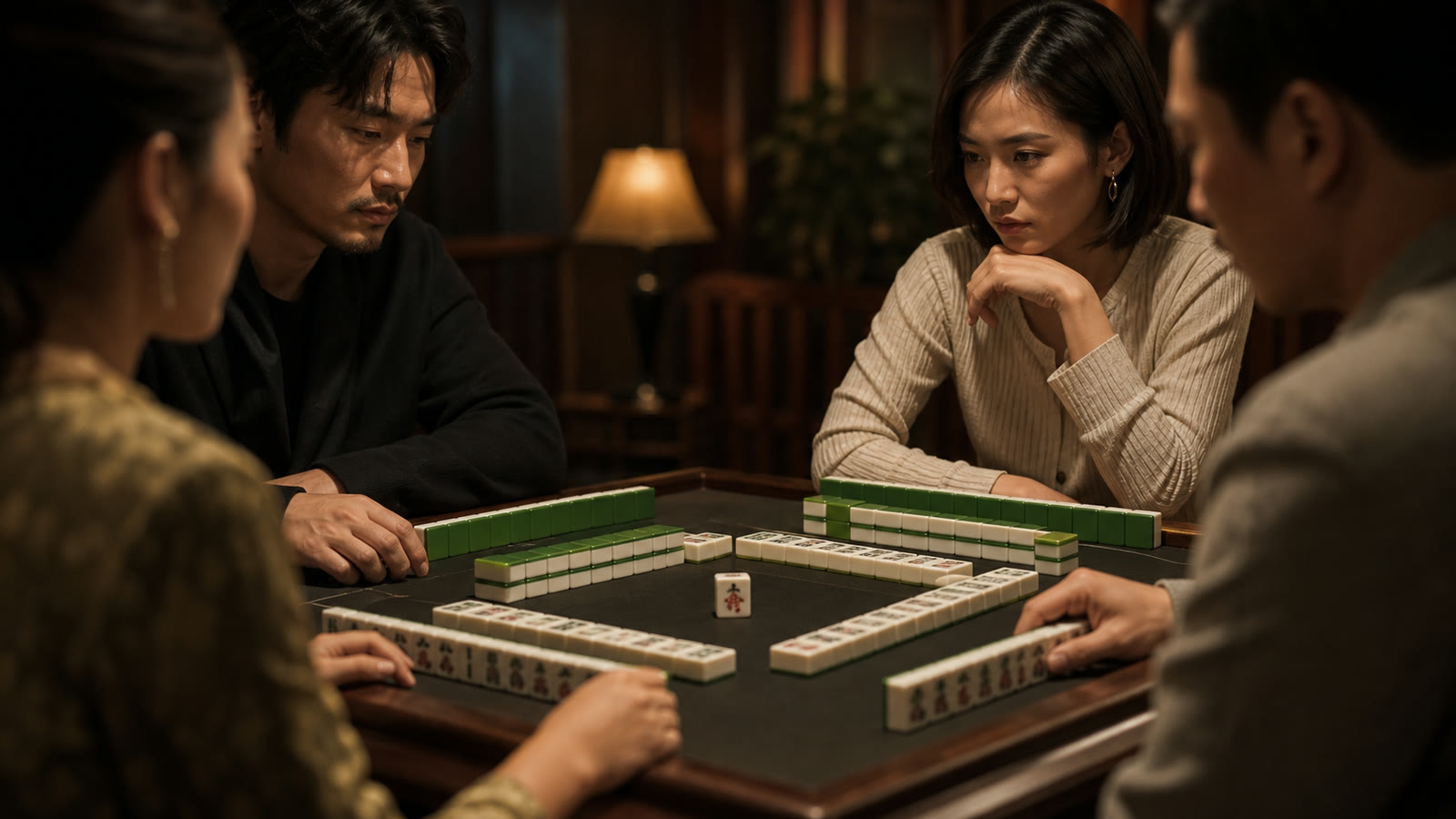
Explore Mahjong pop-culture references in film, fashion, art, design, and social media while keeping rules, table stakes, and context intact.
Read this post, then follow the linked practice or community path.
The live app experience on tsumo follows the same route structure, ruleset labels, and practice surfaces linked below.
Blog focus
Read the latest Mahjong blog posts from tsumo.
Follow internal links to connect each post back to local clubs, puzzles, tutorials, and playable routes.
By tsumo Editorial. Published 2026-06-29, updated 2026-06-29. 8 minute read.
Mahjong imagery travels through film, fashion, design, music, and social media because the tiles are instantly visual and culturally loaded.
Mahjong tiles are compact symbols: numbers, suits, winds, dragons, flowers, and ritual all fit in the palm of a hand. That makes them attractive to pop culture, but it also creates a risk that the game becomes only an aesthetic.
Mahjong imagery travels through film, fashion, design, music, and social media because the tiles are instantly visual and culturally loaded. It focuses on tiles, design, fashion, and symbolism rather than repeating a screen-scene catalog.
Cultural coverage and official media references support the symbolism discussion without overstating decorative tile imagery.
Why the tiles are so reusable
Mahjong tiles are graphic, modular, and recognizable even to people who do not know the rules. Designers can use them as pattern, prop, status object, or shorthand for strategy and luck.
Practice move: The more visible the image becomes, the more useful it is to explain the actual game behind it.
Fashion and product design
Sets, clothing, jewelry, and home goods often borrow tile faces because they look tactile and collectible.
Good design can introduce people to the game, while shallow design can detach symbols from context. Creators should name the source and avoid pretending Mahjong is only an exotic motif.
Film and television spillover
A memorable screen scene can make the table feel glamorous, dangerous, intimate, or funny.
Those associations shape what new players expect before they learn a single rule. Teachers can use pop-culture familiarity as an entry point, then correct misunderstandings gently.
Social media and table identity
Photos of tiles, racks, and snacks help clubs advertise a feeling before they advertise a ruleset. That can be effective if the piece also tells people whether beginners are welcome and what variant is played.
Practice move: A beautiful table piece should include a practical next step.
Respectful reference versus decoration
Referencing Mahjong respectfully means remembering that it is a living game with rules, histories, and communities.
The line is crossed when imagery is stripped of meaning or used to imply vague mysticism without context. If a reference makes people ask how to play, meet that question with a clear learning path.
Practical Checklist
Name the game and variant when possible.
Do not use tile imagery as generic Asian decoration.
Pair visuals with a learning link.
Credit communities and sources.
Invite viewers to an actual table.
Where to Go Next
Learn Mahjong online - Use the beginner learning path when a piece raises a rule, scoring, or table-flow question you want to practice.
Find a Mahjong club - Use the club locator to turn cultural context into an in-person table, teaching session, or local meetup.
Practical Applications
Design, Fashion, and Symbolism
This piece is strongest when it focuses on Mahjong as visual language rather than repeating a screen-scene catalog. Tile faces, racks, green felt, red and green suits, and the square table signal luck, family, leisure, secrecy, or heritage depending on context. Fashion and product design often borrow those signals because they are recognizable even when the rules are absent.
Tiles as pattern: bamboo, circles, characters, winds, and dragons work as graphic motifs because they are compact and repeatable.
Tables as status: a Mahjong setup can imply domestic sophistication, auntie authority, elite leisure, or neighborhood routine.
Hands as metaphor: concealed information and a final reveal give writers an easy symbol for strategy and sacrifice.
Risk of flattening: decorative Mahjong imagery can become generic Asian-coded texture when detached from actual players and variants.
The companion media-impact piece handles close readings of films and shows. This piece asks what happens when Mahjong leaves the table and becomes design shorthand. That distinction prevents overlap and makes both posts more useful.
A good pop-culture reference respects specificity. A joker tile, a Riichi stick, an American card, and a Chinese character tile do not carry identical meanings. Readers should be encouraged to notice which object is being used before interpreting the reference.
Symbol Reading With Boundaries
A Mahjong tile can symbolize luck, strategy, family, leisure, secrecy, or Asian heritage, but readers should not assume every reference carries every meaning. Context matters. A fashion print may use tile geometry as pattern. A restaurant poster may signal social warmth. A film close-up of a final discard may signal sacrifice or threat. Treating those uses as identical makes the analysis feel inflated.
Readers should also have a boundary test: does the reference involve real play, recognizable variant details, or only the look of tiles? If it involves real play, readers can discuss table dynamics. If it uses only imagery, readers should discuss design and cultural shorthand while being careful not to invent a scene-level interpretation.
Specificity improves respect: name whether the object is an American card, Riichi stick, dragon tile, wind tile, flower, or joker.
A reference is stronger when players, language, and table procedure appear alongside the objects.
A decorative tile pattern can still be beautiful, but beauty is not the same as cultural understanding.
Curation Over Exhaustion
A pop-culture reading curates examples instead of chasing every reference. The best examples teach readers a pattern they can reuse: tile imagery as graphic design, the table as family authority, the winning hand as revelation, or the set as a fashionable object. Once readers understand those patterns, they can interpret new references without a giant catalog.
Curation also reduces source risk. Official pages, museum context, and reputable cultural reporting can support selected examples. Random image posts and unsourced lists are weaker, especially when they repeat screenshots without provenance. A smaller set of accurately described examples is stronger than a long unsourced catalog.
Choose examples where Mahjong materially affects meaning, not only background decoration.
Use official or reputable sources when naming films, shows, exhibitions, or product lines.
Cross-link to the media-impact piece when the reader needs deeper scene analysis.
Reader Usefulness
The reader should leave this guidance with a practical lens: identify the object, identify the context, and decide whether the reference is about play, memory, style, or atmosphere. That lens makes the piece more useful than a list because readers can apply it to new films, clothing drops, restaurant interiors, museum displays, or social posts.
Specificity Note
Specificity is the editorial standard: name the tile, table, variant, source, and context whenever the evidence supports it. If the reference is only decorative, say that plainly and keep the interpretation light.
Interpreting Objects Carefully
A pop-culture reading works best with readers a careful object-reading method. First, identify the object: tile, rack, scoring stick, American card, table, or full hand. Second, identify whether the object is being used for real play, decorative pattern, family memory, luxury styling, or generic atmosphere. Third, ask whether the source gives enough context to support a cultural reading. This method prevents shallow references from being overinterpreted and strong references from being flattened into decoration. It also helps readers notice specificity. A joker tile, dragon tile, wind tile, Riichi stick, and Charleston card do not signal the same rule world. Naming the object correctly is the first step toward respecting the players behind the image.
Source Notes and Limits
The cited sources use cultural coverage and official media references to discuss symbolism, design, and recurring visual shorthand without treating every Mahjong image as equivalent.
This advice distinguishes close scene analysis from decorative reference. It avoids reading cultural depth into every tile motif when the source only supports a design or fashion observation.
Quick FAQ
Why are Mahjong tiles so common in design? They are compact, patterned, colorful, and immediately recognizable, which makes them attractive visual shorthand.
When does a reference become shallow? When it uses tiles as generic atmosphere without respecting players, variants, language, or the table context behind the imagery.
Where should screen-scene examples go? Use the media-impact guidance for film and television scene readings; keep this guidance focused on design, fashion, and symbolism.
tsumo Editorial — tsumo Editorial is the organizational byline for source-backed Mahjong guides and articles published by tsumo. The team checks rules explanations against implemented app behavior and maintains corrections through the public contact process.
 tsumo
tsumo