 tsumo
tsumoStandard 14-Tile Hand (4 Sets + 1 Pair)
Used in Simplified, HKOS, Riichi, and MCR.
Compare Chinese Mahjong, Hong Kong Mahjong, Riichi, MCR, Filipino Mahjong, and Taiwanese Mahjong by rules, scoring, difficulty, and play style.
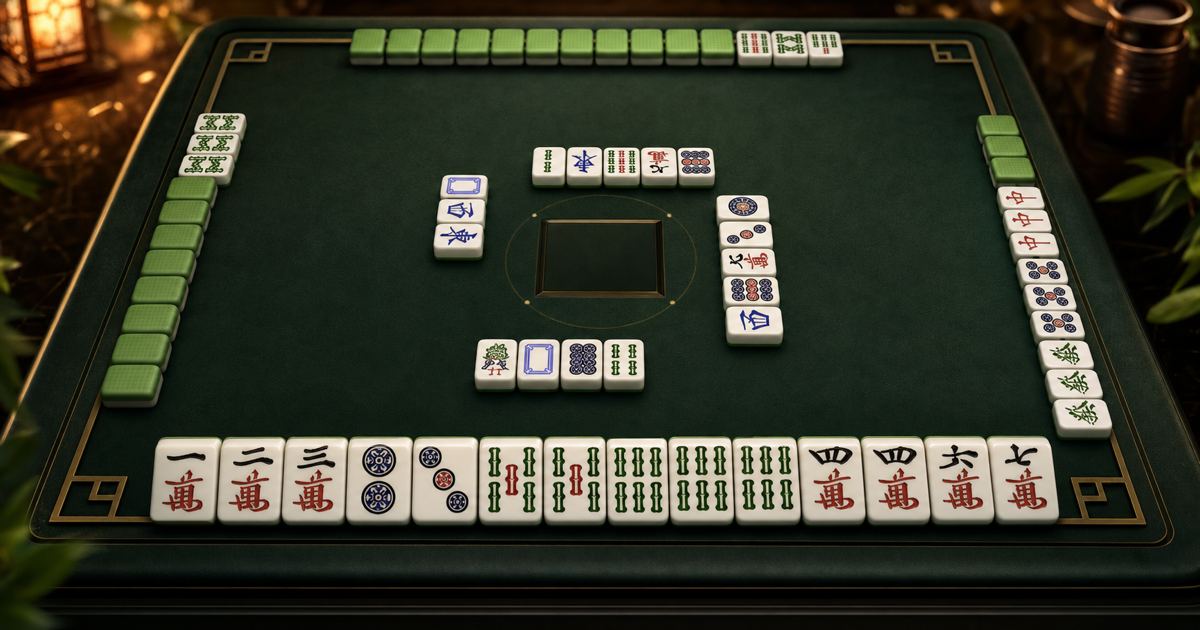
Explore the full spectrum of Mahjong rulesets: 14-tile vs 16-tile systems, scoring philosophies, flower tile mechanics, and comparative gameplay pacing.
While all Mahjong games share the draw-and-discard loop, the global Mahjong landscape is divided into two distinct structural families.
14-Tile Mahjong (13 tiles in hand + 1 winning tile) is the international standard used in Japanese Riichi, Hong Kong Classic (HKOS), MCR (Competition Rules), and Simplified Chinese. Hands require 4 sets and 1 pair.
16-Tile Mahjong (16 tiles in hand + 1 winning tile) is the dominant regional standard in Taiwan and the Philippines. Hands require 5 sets and 1 pair, creating richer combinatorial possibilities and longer turn development.
Used in Simplified, HKOS, Riichi, and MCR.
Used in Taiwanese and Filipino Mahjong.
Beyond tile counts, variants differ in how they reward hand achievement.
| Variant | Hand Size | Win Gate | Defense Level | Best Player Match |
|---|---|---|---|---|
| Simplified Chinese | 14 tiles | None (Shape only) | Low | First-time learners mastering turn flow |
| Hong Kong Classic | 14 tiles | 3 Non-Flower Faan | Medium | Fast-paced social and classic table players |
| Japanese Riichi | 14 tiles | 1 Valid Yaku | Very High | Tactical thinkers who love deep defense and poker-like betting |
| MCR (Guobiao) | 14 tiles | 8 Points | High | Tournament competitors who enjoy complex pattern puzzles |
| Taiwanese Mahjong | 16 tiles | 1 Tai | Medium | Players who love big 5-meld hands and additive scoring |
| Filipino Mahjong | 16 tiles | Structure + Special Melds | Medium | Lively action players who enjoy flower replacements and pot multipliers |
The defensive landscape changes drastically depending on the variant you play.
In Japanese Riichi, the strict Furiten rule and high-multiplier Dora hands make defense paramount. When an opponent declares Riichi, players routinely execute Betaori (total folding) by discarding 100% safe tiles (Genbutsu) from the opponent's discard pool.
In contrast, Hong Kong Classic and MCR have no Furiten and feature fewer catastrophic multiplier spikes. As a result, tables maintain a high-tempo offensive race where players balance defensive vigilance with aggressive hand completion.
In all six variants, the dealer (East seat) holds special table significance. In Riichi and HKOS, the dealer earns 1.5x to 2x larger payouts when winning, but also pays double when an opponent wins by self-draw (Tsumo / Zimo).
Dealer rotation (Renchan) occurs if the dealer wins or remains in Tenpai during an exhaustive draw in Riichi, adding repeat counters (Honba) that increase subsequent hand value.
Use this side-by-side technical reference to understand the exact mechanical parameters of each mode supported on tsumo.io.
| Parameter | Simplified Chinese | Hong Kong Classic | Japanese Riichi | MCR (Guobiao) | Taiwanese | Filipino |
|---|---|---|---|---|---|---|
| Hand Size (Tiles) | 14 (13+1) | 14 (13+1) | 14 (13+1) | 14 (13+1) | 17 (16+1) | 17 (16+1) |
| Winning Shape | 4 sets + 1 pair | 4 sets + 1 pair | 4 sets + 1 pair | 4 sets + 1 pair | 5 sets + 1 pair | 5 sets + 1 pair |
| Qualification Gate | None (0 gate) | 3 Non-Flower Faan | 1 Valid Yaku | 8 Points | 1 Tai Minimum | Structure + Special Melds |
| Bonus Tiles | None | 8 Flowers/Seasons | Dora Indicators | 8 Flowers/Seasons | 8 Flowers (Seat matching) | Flowers & Honor Replacements |
| Furiten Rule? | No | No | Yes (Strict) | No | No | No |
| Table Pace | Very Fast | Fast | Tactical / Deliberate | Analytical | Lively / Complex | Action-Packed |
When switching between standard 14-tile games (Riichi, HKOS, MCR) and 16-tile games (Taiwanese, Filipino), adjust your hand-building framework:
In 16-tile Mahjong, you are constructing six total blocks (5 sets plus 1 pair) instead of five blocks. This extra set increases the number of turns needed to reach Tenpai and creates more branching paths during hand development.
16-tile Mahjong developed in Taiwan and the Philippines as an extended format requiring 5 complete melds plus a pair (17 winning tiles). It creates larger hands, more diverse tile connections, and unique regional scoring dynamics.
Hong Kong Classic and Japanese Riichi are the two most widely played variants globally, with Riichi dominating online competitive platforms and international anime culture, while HKOS dominates social club play across Chinese communities.