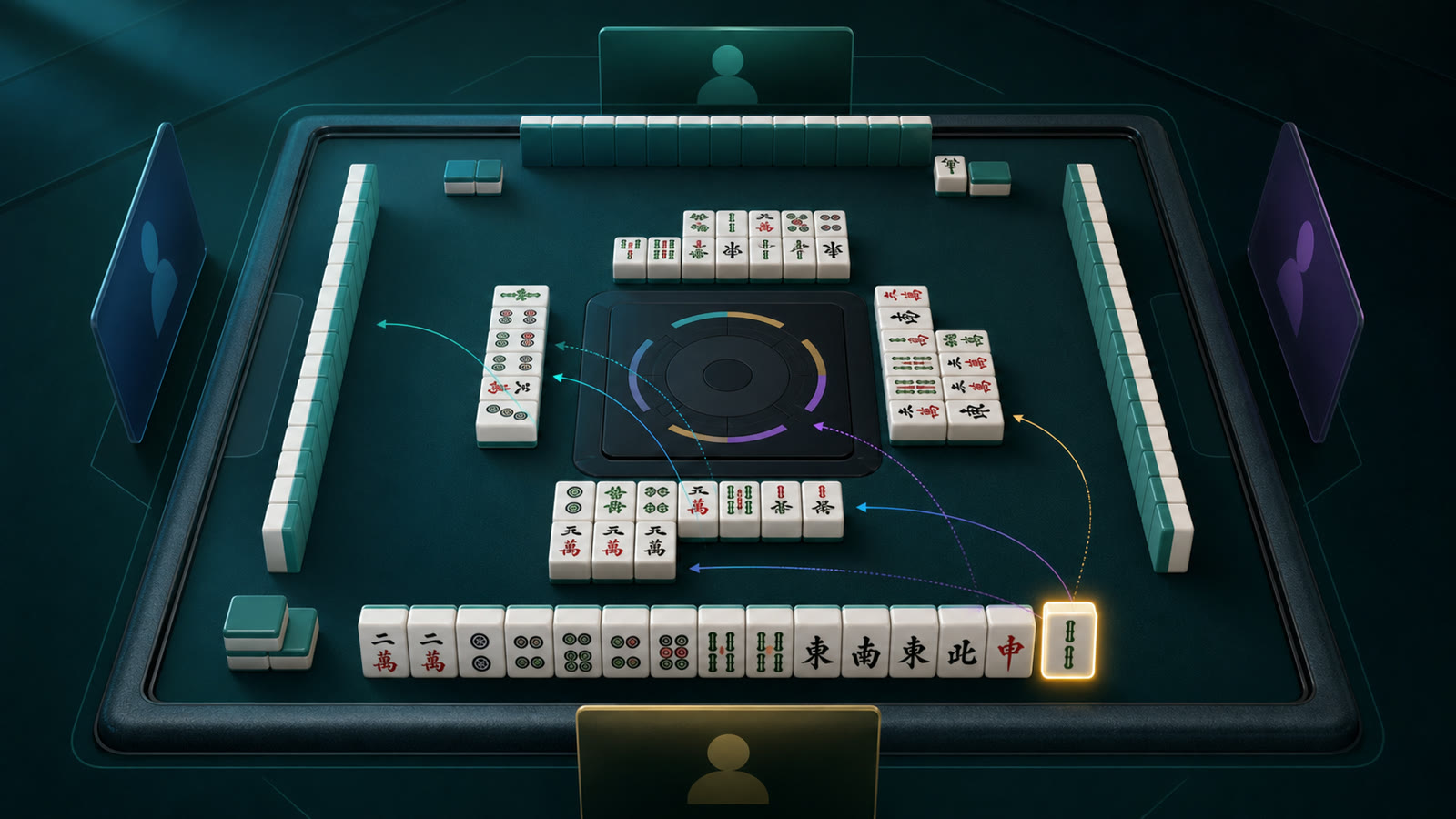
Learn what to focus on in your first 10 Mahjong games: turn flow, hand shape, calls, waits, safety, scoring basics, review, confidence, and rhythm.
Read this post, then follow the linked practice or community path.
The live app experience on tsumo follows the same route structure, ruleset labels, and practice surfaces linked below.
Blog focus
Read the latest Mahjong blog posts from tsumo.
Follow internal links to connect each post back to local clubs, puzzles, tutorials, and playable routes.
By tsumo Editorial. Published 2026-06-29, updated 2026-06-29. 8 minute read.
The first ten games should build table rhythm, hand shape, basic safety, and review habits without asking a beginner to master all scoring at once.
The first ten Mahjong games should not be a test of memory. They should teach the table rhythm: draw, discard, watch, call, count, and review. If you learn what to notice in each phase, confusion turns into a usable practice plan.
The first ten games should build table rhythm, hand shape, basic safety, and review habits without asking a beginner to master all scoring at once. It gives beginners and hosts a limited first-ten-games path with clear priorities and boundaries.
Official player materials and Riichi learning references support the beginner sequence while leaving room for variant-specific substitution.
Games 1 and 2: learn the loop
Your first job is to know when your turn starts, where discards go, and what a completed group looks like. Ignore rare scoring exceptions until you can follow the table without freezing.
Practice move: A beginner who discards legally and tracks turn order is already progressing.
Games 3 and 4: see groups
Start sorting your hand into pairs, sequences, triplets, and isolated tiles.
Do not ask for the perfect discard yet; ask which tile has the least relationship to the rest of the hand. This habit makes every later strategy concept easier.
Games 5 and 6: understand calls
Claims can speed up a hand, but they also reveal information and may change scoring options.
Beginners often call because they can, not because the call improves the whole hand. Before calling, say what group it completes and what your hand still needs.
Games 7 and 8: name your wait
A near-ready hand becomes understandable when you can name the tile or tiles that finish it. This is where Mahjong begins to feel less random because you can count live possibilities.
Practice move: Practice naming waits even when you lose.
Games 9 and 10: add basic safety
Once opponents show danger through calls, discards, or declarations, your own hand is no longer the only question.
Learning to fold early prevents the beginner habit of chasing every close hand. Choose one safe discard principle and apply it before learning advanced reads.
Practical Checklist
Track turn order without help.
Sort by groups, not by tile artwork.
Ask what a call improves.
Name your wait before declaring.
Review one mistake after every game.
Where to Go Next
Learn Mahjong online - Use the beginner learning path when a piece raises a rule, scoring, or table-flow question you want to practice.
Practice Mahjong decisions - Daily puzzles are the fastest way to turn guidance advice into repeatable tile-reading decisions.
Practical Applications
Ten-Game Milestone Table
A beginner improves faster when the first ten games have a limited agenda. Games 1 and 2 should focus on turn order, drawing, discarding, and recognizing a complete hand. Games 3 and 4 should add calls and the cost of exposing sets. Games 5 and 6 should add one scoring requirement, such as yaku in Riichi or card categories in American Mah Jongg. Games 7 and 8 should introduce defensive awareness. Games 9 and 10 should end with a short review of one discard per game.
Learn now: tile names, seat order, legal win shape, discard visibility, and how your table handles calls.
Learn next: basic scoring, common waits, when an exposed set helps, and how to ask for rules clarification.
Do not learn yet: rare limit hands, full penalty catalog, obscure local exceptions, and advanced efficiency debates.
Review habit: after each game, write one thing you noticed and one thing you will ignore until later.
The point is to reduce cognitive load. A new player who knows what not to learn yet will make fewer random decisions than a player trying to memorize every chart at once.
Hosts can make this concrete by naming the goal before each beginner hand. For example: this hand is only about keeping five blocks, or this hand is only about calling clearly. A narrow goal makes mistakes useful instead of embarrassing.
What Each Review Should Capture
The first ten games should end with tiny reviews, not lectures. After game one, ask whether the player knew whose turn it was. After game two, ask whether the player could identify a pair and a sequence. After game three, ask whether a call helped or simply exposed tiles. By game five, ask whether the player knew why a hand was legal or not. By game ten, ask whether one discard felt safer because of visible information.
This review structure lets beginners experience progress before they understand the whole game. It also gives hosts a humane way to correct misconceptions. A player who says I kept too many single honors has learned more than a player who memorized a rare hand name without recognizing a basic wait.
Use one notebook line per game: goal, mistake, next focus.
Keep scoring feedback binary at first: can win or cannot win, then why.
Introduce table defense only after the player can keep the turn loop straight.
Celebrate clear decisions, not only wins; a good fold can be a beginner milestone.
Host Notes for the First Ten Games
A host should expect the first ten games to feel slow. That is not a problem. Slow early games reveal confusion before it becomes habit. If a player repeatedly forgets turn order, do not add scoring complexity. If a player cannot identify a completed hand, do not teach rare hands. If a player calls every possible set, pause and explain what exposure gives away.
Hosts should protect curiosity. Beginners often apologize for slowing the table; a good host can say that the first sessions are for learning, then move advanced players to a regular table if they need speed. Clear table separation prevents resentment on both sides.
After game three, the player should know how to draw, discard, and keep discards visible.
After game six, the player should know why one hand can win and another cannot.
After game ten, the player should have one review habit, not a complete strategy library.
Why Ten Games Is a Container
Ten games is not a magic threshold. It is a container that gives beginners permission to learn in sequence. Some players will understand hand shape in two sessions; others will need more time before scoring feels sensible. Ten games works as a planning tool, not a test that players pass or fail.
Keeping Beginners Oriented
The first ten games should protect orientation. Beginners can tolerate losing; they struggle more when they do not know what question the hand is asking. A host can help by naming one goal before each hand: recognize a complete shape, keep five useful blocks, make one legal call, or notice one dangerous discard. This turns a confusing session into a sequence of small wins. Readers also need to know beginners that asking what am I learning this hand is a good question, not a sign of weakness. That makes the piece more useful than a generic rules overview. The first ten games are less about mastering Mahjong than about building enough confidence to keep returning to the table.
Source Notes and Limits
The cited sources use official player materials and Riichi learning references while keeping the first-ten-games sequence broad enough for beginner tables across variants.
The progression is a teaching model, not a rules document. Hosts should swap in the exact scoring requirement, calls, and win conditions for the variant they are teaching.
Quick FAQ
What should a beginner ignore at first? Ignore rare hands, full penalty catalogs, advanced defense theory, and local edge cases until the turn loop and win shape are comfortable.
How many games before scoring matters? Scoring should appear early, but only as the minimum requirement needed to understand why a hand can or cannot win.
How can hosts reduce overload? Name one learning goal per hand and postpone exceptions unless they directly affect the current game.
tsumo Editorial — tsumo Editorial is the organizational byline for source-backed Mahjong guides and articles published by tsumo. The team checks rules explanations against implemented app behavior and maintains corrections through the public contact process.
 tsumo
tsumo