 tsumo
tsumoLearn to Play Mahjong Online
Learn Mahjong from zero with curriculum-style guides for Chinese Mahjong, Hong Kong, Riichi, MCR, Filipino, and Taiwanese rulesets, plus practice paths.
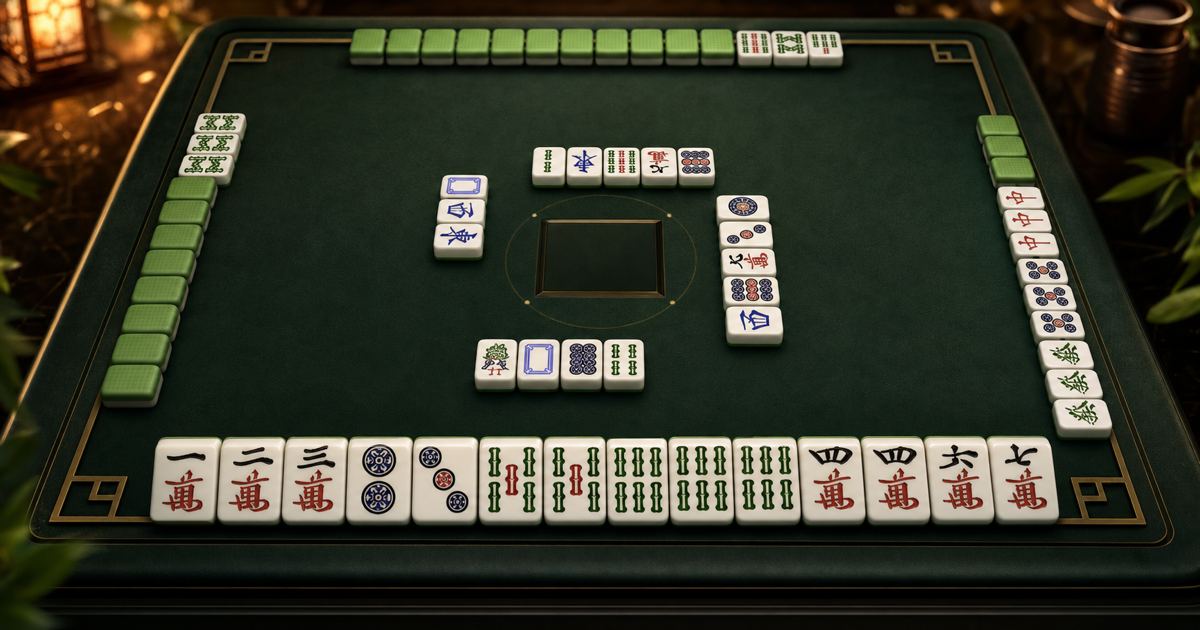
Build a Beginner Curriculum, Not a Page Checklist
A useful beginner curriculum repeats three steps: learn one idea, apply it in a controlled setting, and review a decision you can describe. Start with turn order and complete-hand structure, then add claim timing, then add the value requirement for one ruleset. Progress is not the number of pages opened; it is recognizing the same decision at the table without a prompt.
Keep each early session narrow. Read the section that answers today’s question, complete the matching tutorial, and play one slow bot game. If the hand goes wrong, classify the cause as an illegal shape, a weak value plan, or a risky discard. That diagnosis identifies the next guide to revisit and turns a vague problem into a small skill to practice.
Separate Shared Fundamentals from Variant Rules
Across Tsumo’s modes, players repeatedly draw, evaluate, and discard while shaping groups and a pair. That foundation makes a second variant easier to learn. A legal win still depends on the active ruleset: a complete shape can fail a Hong Kong faan minimum, lack a Riichi yaku, or miss the MCR point threshold. Filipino and Taiwanese games both use larger hands but apply different honor, flower, and scoring rules.
Before changing modes, state which fundamentals transfer and which checklist must be replaced. Keep tile efficiency and turn discipline, but relearn the scoring gate. This boundary is more reliable than memorizing isolated pattern names and helps explain whether a rejected win came from structure or value.
Read Progress from Your First Ten Games
By game three, aim to complete turns without losing track of the required hand shape. By game six, explain most calls before making them and identify tiles that do not support the plan. By game ten, success means choosing a legal, plausible plan earlier even when the hand loses. Win rate is noisy over ten games; decision clarity is a better beginner signal.
Review one hand after each session and record a single next focus. If the same error appears twice, repeat the relevant tutorial before adding a new variant. Move on when questions are about strategy rather than basic legality. That creates a durable progression from guided instruction to independent online play.
Curriculum Study Guides
- How to Play Mahjong - A complete beginner walkthrough of Mahjong: tiles, turn order, hand shape, claims, legal wins, and the fastest path from zero knowledge to your first confident game.
- Mahjong Tiles Guide - An authoritative beginner reference to Mahjong tile sets: suits, honors, terminals, simples, flowers, and how each family functions during hand construction.
- Mahjong Winning Hands Explained - Understand standard Mahjong winning hand anatomy, 4-meld plus 1-pair structures, special non-standard exceptions, and wait quality diagnostics.
- Mahjong Scoring Explained - A comprehensive beginner guide to Mahjong scoring principles: scoring decision trees, base value vs multipliers, payment settlements, and cross-variant rules.
- Mahjong Calls Explained: Sequences, Triplets, and Quads - Master Mahjong calls: Chi, Pon, and Kan mechanics, international tile rotation rules, quad strategic liabilities, and when passing protects your win rate.
- Mahjong Turn Order Explained - Understand Mahjong turn order, counter-clockwise flow, claim priority hierarchy, simultaneous win resolutions, and dealer rotation rules.
- Common Mahjong Beginner Mistakes - Discover the top beginner Mahjong mistakes: overcalling, chasing low-probability special hands, bad waits, reckless quads, and pre-discard diagnostic habits.
- Mahjong Strategy for Beginners - Foundational Mahjong strategy: 5-block hand decomposition theory, wait quality hierarchy, river reading defense, and push-fold decision making.
- Mahjong Variants Explained - Explore the full spectrum of Mahjong rulesets: 14-tile vs 16-tile systems, scoring philosophies, flower tile mechanics, and comparative gameplay pacing.
- Best Mahjong Variant for Beginners - Which Mahjong variant should you learn first? Compare all six tsumo Mahjong profiles by learning curve, complexity, scoring friction, and play style.
- Riichi vs Hong Kong Mahjong - Head-to-head comparison of Riichi and Hong Kong Mahjong: scoring gates, defensive pressure, pace, Furiten rules, and ruleset transition tips.
- Riichi vs MCR Mahjong - Compare Japanese Riichi and Mahjong Competition Rules (MCR): 8-point gate vs single yaku, pattern planning, open-hand calling freedom, and table economy.
- What Is Furiten in Riichi Mahjong? - Learn what furiten means in Riichi Mahjong, how it blocks your win claims (ron), how common beginner discard errors trigger it, and key defensive tips.
- Riichi Yaku for Beginners - Comprehensive guide to beginner Riichi yaku: Tanyao, Pinfu, Yakuhai, Riichi, Honitsu, Chiitoitsu, exact conditions, tile blueprints, and the Dora trap.
- Hong Kong Mahjong Scoring Explained - Complete Hong Kong Mahjong scoring guide: 3 non-flower faan gate, common starter combinations, flower rules, doubling tables, and limit hands.
- MCR Scoring Explained - Comprehensive guide to MCR (Mahjong Competition Rules): 8-point minimum gate, non-repeat exclusion principles, top 8-point starter routes, and chicken hand rules.
Continue the Curriculum
- How to play Mahjong - Learn the shared turn and hand-building foundation.
- Tutorial library - Practice one ruleset in a guided lesson.
- Best Mahjong variant for beginners - Choose a second mode after the foundation is stable.
- Clubs directory - Find local in-person and online Mahjong clubs.
- Daily puzzles - Solve daily Mahjong discard and efficiency puzzles.