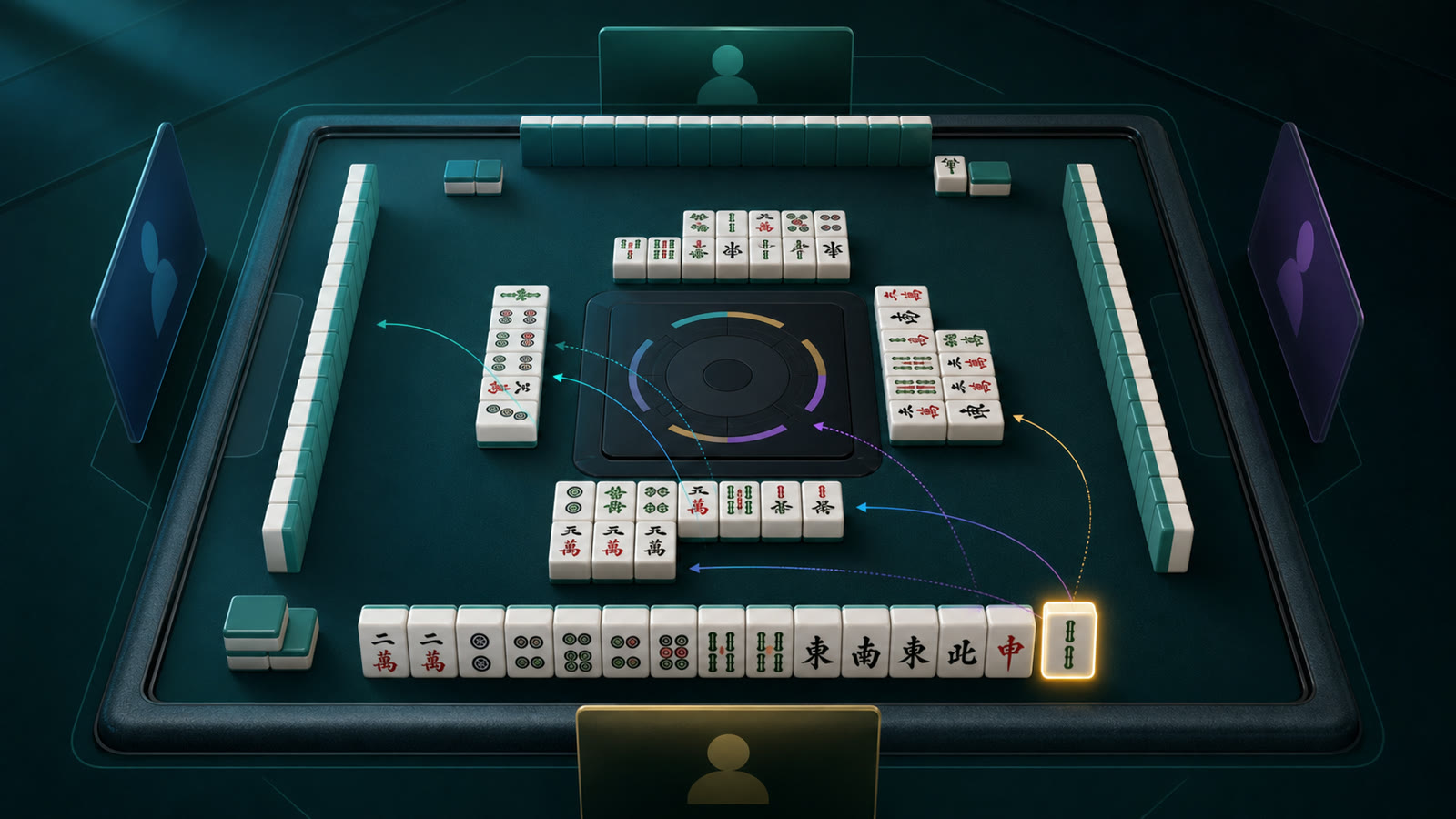
Study defensive Mahjong basics: safe tiles, discard reading, suji, live danger, push-fold judgment, practical folding habits, and review drills.
Read this post, then follow the linked practice or community path.
The live app experience on tsumo follows the same route structure, ruleset labels, and practice surfaces linked below.
Blog focus
Read the latest Mahjong blog posts from tsumo.
Follow internal links to connect each post back to local clubs, puzzles, tutorials, and playable routes.
By tsumo Editorial. Published 2026-06-29, updated 2026-06-29. 8 minute read.
Defense is the skill that tells you when a promising hand is no longer worth the danger, especially in Riichi-style push-fold decisions.
Defense is not giving up. It is choosing not to donate points when the table says your winning chance is no longer worth the risk. In Riichi especially, the strongest players survive hands they are not supposed to win.
Defense is the skill that tells you when a promising hand is no longer worth the danger, especially in Riichi-style push-fold decisions. It turns defense into a ranked decision process that beginners can review after each hand.
Riichi Book 1 and WRC materials support the defense vocabulary, with broader advice kept to hidden-information habits.
The mindset shift
Beginners often evaluate only their own hand, but defense starts when opponents become part of the calculation. A hand that was worth pushing on turn four may be a clear fold after riichi or multiple calls.
Practice move: Ask whether the table changed before asking whether your hand is close.
Safe tiles and visible information
A tile already discarded by a threatening player is usually safer against that player than a live tile they have not shown.
Absolute safety, relative safety, and table-wide safety are different ideas. Build your fold from the most reliable information first.
Suji and its limits
Suji can identify safer lines against certain two-sided waits, but it is not a magic shield.
Closed waits, honor tiles, pair waits, and hand context can break simple shortcuts. Use suji after checking direct discards, not before.
Push-fold judgment
A push needs a reason: strong value, good wait, short distance to tenpai, or score situation. A fold needs discipline: enough danger, weak upside, or safe tiles available.
Practice move: Write down one push-fold decision after each session to see whether your reasons were real.
Practicing defense deliberately
Defense improves when you review losing hands where you dealt in and hands where you successfully folded.
Winning hands can hide defensive mistakes because the result feels good. Use puzzles and replays to practice identifying the moment the hand changed.
Practical Checklist
Identify the threatening player.
Find guaranteed or highly safe tiles first.
Check whether your hand has enough value to push.
Do not rely on one shortcut alone.
Review deal-ins without blaming luck.
Where to Go Next
Read Riichi rules - Use the Riichi rules guide for yaku, furiten, reach declarations, and push-fold decisions mentioned here.
Practice Mahjong decisions - Daily puzzles are the fastest way to turn guidance advice into repeatable tile-reading decisions.
Practical Applications
Safe-Tile Hierarchy Example
Defense starts with a hierarchy, not a feeling. Against a Riichi declaration, a tile already discarded by that player is usually the cleanest genbutsu. A tile discarded by every other opponent may be safer than a live middle tile, but it is not the same proof. Honors with three visible copies can be safer than live number tiles, while suji and one-chance ideas are clues rather than guarantees.
First choice: tiles the threatening player has already discarded after the relevant timing.
Second choice: tiles that are exhausted or nearly exhausted in the visible pool.
Third choice: tiles supported by suji, kabe, or other shape-reading clues, with score context checked.
Last resort: live middle tiles that complete many common waits, especially near an opponent's recent discards.
Push-Fold Scenario
Imagine you are one away from tenpai with a cheap hand, non-dealer, and the dealer declares Riichi. Your best attacking discard is a live 5p, while you hold two genbutsu honors. Folding is usually the disciplined choice because the upside is small and the penalty can be large. Change the hand to dealer mangan potential with two safe follow-up tiles and the decision becomes closer. Defense is not cowardice; it is expected value plus placement plus available safety.
For broader Mahjong variants, translate the hierarchy into local rules. The exact Riichi vocabulary may not apply, but the habit does: identify the threat, rank your safe exits, and push only when the reward justifies the danger.
Defense by Score Context
Defensive play depends on the fact that safety is not a single setting. The same discard can be correct or reckless depending on dealer status, hand value, placement, and how many safe tiles remain. Folding a cheap non-dealer hand against dealer riichi is ordinary discipline. Folding a high-value dealer hand with multiple safe follow-ups may be too passive if the table situation demands points.
Beginners often hear defense as stop playing. A better explanation is choose which risks are worth paying for. A push is a purchase: the price is deal-in risk, and the product is speed, value, or placement recovery. If the product is small, do not pay a large price.
Before pushing, name the hand value you expect if you win.
Before folding, count how many genuinely safe turns you can survive.
Before using suji or kabe, check whether a simpler genbutsu exists.
After the hand, review the first dangerous discard, not only the deal-in tile.
Common Defense Mistakes
New defenders often make three mistakes. First, they save a safe tile too long and cut danger earlier than necessary. Second, they trust a partial clue such as suji without checking whether a simpler safe tile exists. Third, they decide to fold but keep improving the hand, which usually means they are neither attacking nor defending well.
The fix is to define the mode. If attacking, name the value and the risky tile you are willing to pay. If folding, spend safe tiles in an order that preserves future turns. If half-pushing, name the condition that will make you stop. Ambiguous mode creates most beginner deal-ins.
Useful defense coaching also explains emotional discipline. Folding can feel like losing before the hand ends, especially for players who came from variants with less formal defense language. The better frame is resource preservation: points not lost remain available for the next hand.
Defense Review Questions
A defensive review should ask three questions after the hand. What was the first moment I knew someone was dangerous? What was my safest tile at that moment? What reward did I expect if I pushed anyway? These questions expose the decision earlier than the deal-in and help players improve without obsessing over the final unlucky tile.
Final Defense Note
The most important defensive habit is noticing danger early enough to still have choices. Once every safe tile is gone, the decision has often already been made by earlier greed.
Defense as Timing
Defensive study emphasizes timing. Folding after every safe tile is gone is not really folding; it is damage control. Good defense starts when a threat becomes visible and the player still has options. That might be an opponent's riichi, a dangerous open hand, a dealer push, or a score situation where dealing in would change placement. Players should mark that first danger moment during review. If the player can identify it, they can ask whether their next discard preserved future safety or spent it. This timing lens is easier for beginners than memorizing every advanced read, and it gives experienced players a sharper way to discuss mistakes without hindsight bias.
Source Notes and Limits
The cited sources use Riichi Book 1 and WRC materials for defense vocabulary, then translates the underlying risk habit for broader hidden-information play.
Terms such as genbutsu, suji, and kabe are Riichi-specific. Other variants still reward threat assessment, but the exact safety logic should be confirmed against local rules.
Quick FAQ
What is the safest tile after Riichi? A tile already discarded by the threatening player is usually the cleanest starting point, but timing and local rules still matter.
Is folding a beginner skill? Yes. Beginners improve faster when they learn that not dealing in can be as valuable as chasing every close hand.
Does defense work outside Riichi? The exact vocabulary changes, but threat recognition, safe exits, and reward-versus-risk thinking apply broadly.
tsumo Editorial — tsumo Editorial is the organizational byline for source-backed Mahjong guides and articles published by tsumo. The team checks rules explanations against implemented app behavior and maintains corrections through the public contact process.
 tsumo
tsumo