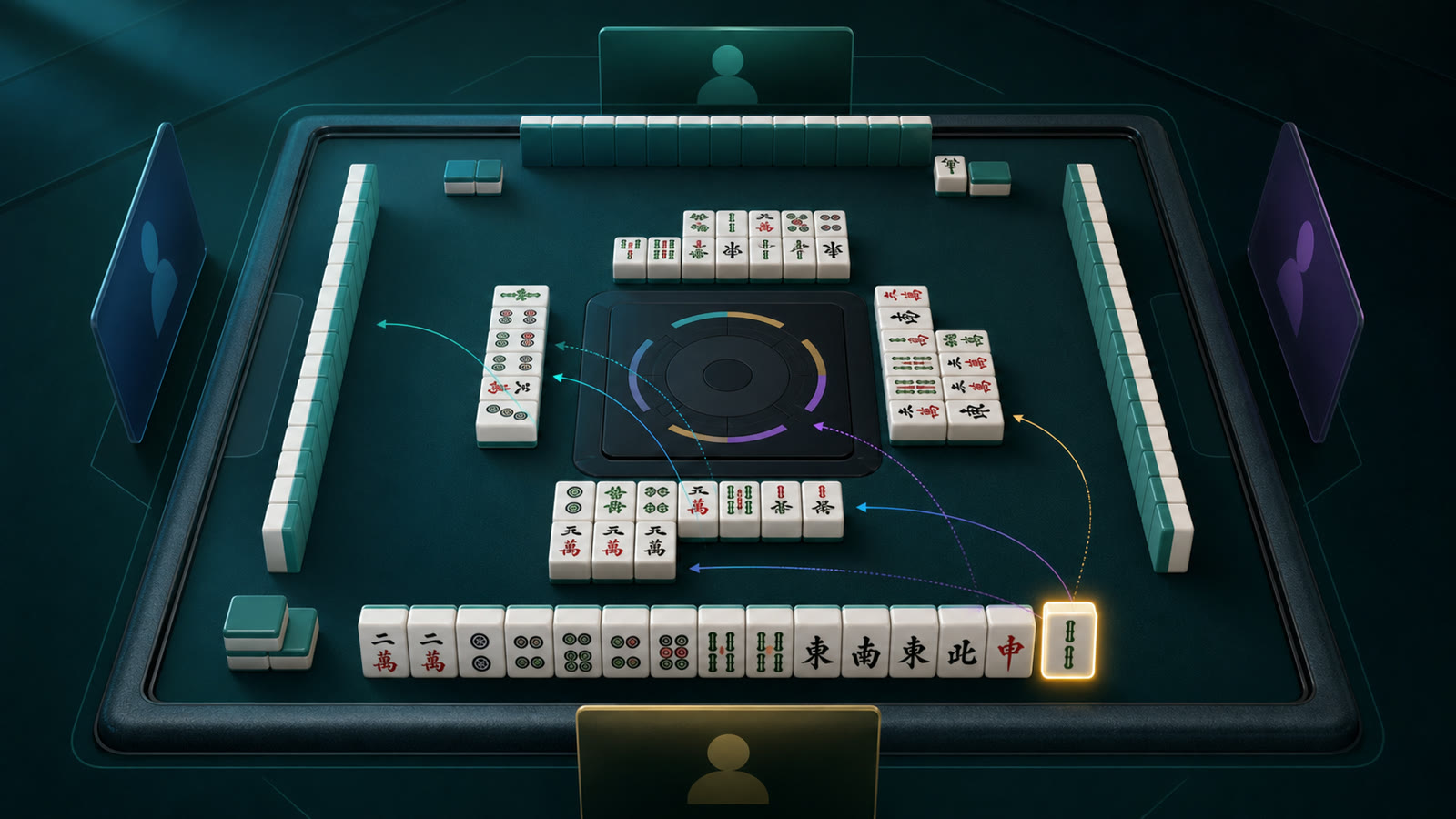
Explore competitive Mahjong through M.LEAGUE, WRC, MCR, online ladders, broadcast play, spectator design, practice habits, and event prep paths.
Read this post, then follow the linked practice or community path.
The live app experience on tsumo follows the same route structure, ruleset labels, and practice surfaces linked below.
Blog focus
Read the latest Mahjong blog posts from tsumo.
Follow internal links to connect each post back to local clubs, puzzles, tutorials, and playable routes.
By tsumo Editorial. Published 2026-06-22, updated 2026-06-29. 10 minute read.
Competitive Mahjong is growing through pro leagues, international tournaments, online ladders, broadcast storytelling, and clearer rules documents.
Competitive Mahjong works because hidden information can be explained. The best leagues and tournaments make private decisions visible through rules, commentary, score context, and repeatable event structures.
Competitive Mahjong is growing through pro leagues, international tournaments, online ladders, broadcast storytelling, and clearer rules documents. It explains competition as a system of rules documents, score incentives, broadcasts, and event logistics.
WRC materials, M.LEAGUE context, MIL references, and study sources distinguish event procedure, broadcast product, and player preparation.
Why Riichi broadcasts well
Riichi gives spectators visible signals: discards, calls, riichi sticks, dora indicators, score position, and endgame danger. Those signals let commentary explain why a player pushed, folded, or chose a lower-value route.
Practice move: Watch broadcasts with the discard pool in mind, not only the winning hand.
M.LEAGUE and team storytelling
Professional leagues make players recognizable across seasons, which helps viewers follow style, risk tolerance, and rivalry.
Team formats also translate individual hand decisions into larger season narratives. For learners, the value is seeing how experts manage score position over many hands.
World tournaments and rule clarity
International events need written rules because local habits cannot resolve every dispute at a mixed table.
Documents such as WRC materials define procedure, penalties, and expectations before the first round. A competitor should read event rules as seriously as they study hand theory.
MCR and mind-sport framing
MCR-style competition emphasizes pattern recognition, point gates, and standardized scoring across a broad international field. It offers a different competitive skill profile from Riichi, especially around pattern inventory and fan calculation.
Practice move: Players moving between formats should rebuild scoring habits from the ground up.
Online ladders as talent pipelines
Digital play gives ambitious players volume, replay access, and opponent variety that local rooms may not provide.
Online rankings are not the same as tournament readiness, but they train speed and consistency. Pair online volume with live-table etiquette and event procedure practice.
What spectators need next
Mahjong broadcasts become easier to follow when viewers see waits, danger, score targets, and likely hand routes.
The game does not need to become simpler; the presentation needs to reveal decision stakes. Good spectator design teaches enough to make the next discard meaningful.
Practical Checklist
Read the event rule packet.
Practice scoring under time pressure.
Review losses by score position, not only hand shape.
Watch broadcasts for folding decisions.
Use online ladders for volume and local events for composure.
Where to Go Next
Read Riichi rules - Use the Riichi rules guide for yaku, furiten, reach declarations, and push-fold decisions mentioned here.
Practice Mahjong decisions - Daily puzzles are the fastest way to turn guidance advice into repeatable tile-reading decisions.
Read MCR rules - Use the MCR guide when international competition, pattern scoring, or point-gate language needs a concrete rules reference.
Practical Applications
League and Tournament Comparison
Competitive Mahjong now includes several different products. WRC-style events emphasize written Riichi rules, adjudication, and international comparability. M.LEAGUE presents professional teams, standings, personalities, and broadcast drama. MCR-oriented events use a different scoring vocabulary and pattern catalog. Online ranked ladders add volume and data, but they do not automatically teach event procedure.
For players: read the rules document, penalty policy, seating format, and scoring sheet before practicing tactics.
For spectators: learn the score situation first, then judge whether a player is chasing placement, hand value, or safety.
For organizers: publish variant, clock rules, appeal process, table equipment, and score-reporting workflow before registration opens.
For online qualifiers: confirm identity rules, disconnect policy, replay review, and whether platform settings exactly match the event.
Broadcast Viewing Guide
A Mahjong broadcast becomes easier to follow when viewers track three numbers: current placement, points needed to change placement, and the likely value of each visible attack. A discard that looks timid may be correct if the player already holds a qualifying position; a risky push may be mandatory if only first place advances.
That spectator frame keeps the advice from treating competition as simply better casual play. Competitive Mahjong is a rules, media, and logistics system built around comparability.
Practice for Competition, Not Just Winning
A competitive player needs a practice routine that mirrors event pressure. Casual ladder volume can build pattern recognition, but tournaments add seating order, clock management, score reporting, judge calls, breaks, fatigue, and the emotional effect of visible standings. Hosts should readers to practice these logistical details before the event, not discover them in round one.
For Riichi events, that means reading penalty sections and score-sheet procedure as seriously as yaku lists. For MCR or other international formats, it means learning the scoring vocabulary and minimum-point requirements well enough that a judge call does not become a panic. For online qualifiers, it means testing the device, connection, account, and platform settings before the match window.
Spectators need a different preparation path. They should learn how placement incentives change discard choices. A player in first may fold hands that look promising; a player in fourth may push thin waits because only a large swing matters. Commentary becomes clearer when viewers stop asking whether the hand is pretty and start asking what result the player needs.
Player practice: one rules-document review, one score-reporting rehearsal, and one fatigue-aware session per week before an event.
Organizer practice: publish all table procedures and dispute paths before registration closes.
Spectator practice: pause a replay before key discards and state the placement goal before hearing commentary.
Media practice: explain why a safe fold can be the strongest competitive move in a given score position.
What Competitive Coverage Must Answer
Competitive Mahjong coverage should answer questions a player or spectator has before a real event. What rule document controls the table? How are seats assigned? How are scores reported? What happens after a misdeal, dead hand, missed win, disconnect, or scoring dispute? How does advancement work? Which decisions are strategic and which are procedural? These details separate useful event coverage from generic excitement about competition.
For spectators, competitive coverage should decode incentives. If a player needs second place to advance, a small safe hand may be better than a heroic push. If a player needs a top, they may accept risks that look reckless in ordinary ladder play. If a team league has season standings, table decisions may reflect team points rather than only individual pride. Broadcast analysis should make those incentives visible.
For players, competitive coverage should encourage disciplined preparation. Read the rules once for legality, once for penalties, and once for logistics. Practice with the event's exact red-five, uma, oka, starting point, time control, or scoring-sheet assumptions where applicable. The more procedure is practiced, the more mental space remains for actual Mahjong decisions.
For organizers, transparency matters. Publish rules early, test score submission, name judges or appeal paths, and make equipment expectations public. A tournament can survive slow hands; it struggles when players believe rulings are improvised.
Why Competition Changes Strategy
Competition changes strategy because the objective is no longer simply win the next hand. The objective may be advance from a table, preserve a season ranking, maximize team points, avoid last place, or meet a target score before the final hand. That changes which risks are rational. A hand that is too small for the moment may be strategically dead even when it is close to completion.
Readers should make this visible with plain examples. A player leading late may fold a tempting hand because second place is enough. A trailing player may need a specific value and therefore reject a cheap open win. A team player may accept a conservative line because minimizing loss matters for standings. Readers who understand these incentives will follow broadcasts and tournaments with far less confusion.
Competition Source Note
Competition coverage also needs dated sources because leagues, qualification paths, and event rules change. Hosts should readers to treat WRC materials, M.LEAGUE pages, MIL references, and platform policies as current to the access date, then verify again before registering, traveling, streaming, or using the advice for event preparation.
The practical endpoint is simple: competitive Mahjong rewards players who prepare the room around the hand as carefully as the hand itself. Rules literacy, score literacy, and broadcast literacy all belong in the same guidance because modern competition depends on all three.
That framing also gives casual players a path into competition: learn the event document, practice the format, and watch broadcasts for incentives rather than only spectacular winning hands.
That is why event preparation starts with documents before tactics.
Preparation prevents confusion because event pressure magnifies small misunderstandings about seating, score targets, and judge procedure.
Competitive Literacy
Competitive literacy has three layers. Rules literacy tells a player what is legal. Score literacy tells a player what result is useful. Event literacy tells a player what happens when procedure breaks. Many strategy articles focus on the first two and ignore the third, but real tournaments depend on all three. A missed score report, a misunderstood time rule, or an unclear appeal path can affect results as surely as a bad discard. Readers should make this concrete for players and spectators. Players should practice with the event document open. Spectators should ask what placement or team result the player needs. Organizers should publish processes early enough that no one learns them by argument. That is the difference between competitive excitement and avoidable confusion.
The guidance also keeps ambition realistic. A first tournament goal may be submitting clean scores, understanding penalties, and finishing rounds calmly. Strong competitive habits start with procedural confidence before advanced strategy matters.
Source Notes and Limits
The cited sources use WRC materials, M.LEAGUE context, Mahjong International League materials, and Riichi study sources to distinguish rules, broadcast product, and tournament logistics.
League details and platform policies can change, so readers should verify current standings, event documents, and qualifier rules before making travel, registration, or training decisions.
Quick FAQ
What should spectators track first? Track placement, points needed to change placement, and whether the player needs value, speed, or safety.
Are online rankings the same as tournament strength? They show volume and platform performance, but live events add procedure, pressure, penalties, and event-specific scoring incentives.
Why compare leagues and tournaments? They serve different audiences: written competition, professional broadcast, international rules development, and daily practice ladders.
tsumo Editorial — tsumo Editorial is the organizational byline for source-backed Mahjong guides and articles published by tsumo. The team checks rules explanations against implemented app behavior and maintains corrections through the public contact process.
 tsumo
tsumo